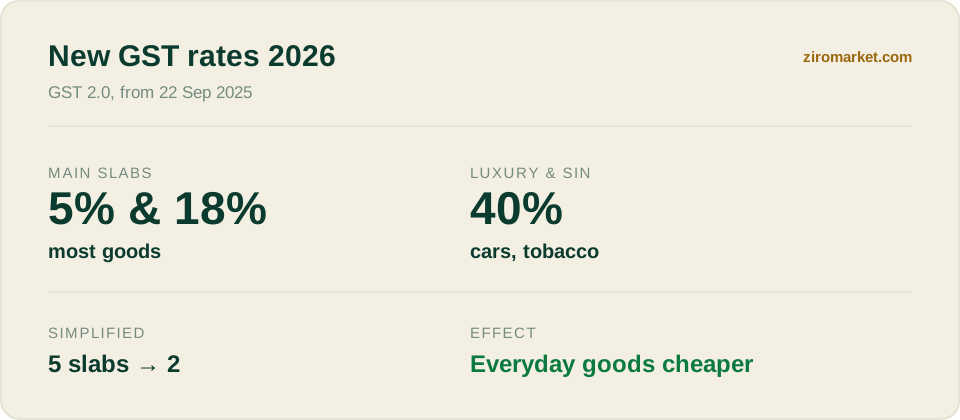
For years, the hardest question about GST was not how much tax you paid but which of five rates applied. GST 2.0, effective from September 22, 2025, ended that by collapsing the old 0%, 5%, 12%, 18%, and 28% structure into mainly two slabs, 5% and 18%, with a single 40% rate reserved for luxury and sin goods. The result is a tax that is simpler to follow and, for most everyday purchases, lighter.
The reform came out of the 56th GST Council meeting and was pitched as a growth measure: fewer slabs, lower rates on mass-use goods, and easier compliance for businesses. Nearly a year on, its fingerprints are all over shelf prices and demand.
From five slabs to two
The old system taxed goods across five bands, which meant constant arguments over whether a product belonged in 12% or 18%, or 18% or 28%. The new structure routes almost everything into 5% for essentials and 18% for most other goods and services, with the 40% band carved out for a short list of luxury and sin items like high-end cars, tobacco, and aerated drinks. A few niche rates, such as 3% on gold and 0.25% on rough diamonds, were left untouched.
Here is the shift at a glance.
The mechanics of the move mattered as much as the headline. Almost all goods that sat at 12% dropped to 5%, and roughly 90% of items in the old 28% slab fell to 18%, so the change was overwhelmingly a tax cut rather than a reshuffle.
What got cheaper
The most visible effect was on the household basket. Soaps, shampoos, toothpaste, and other personal care products moved into the 5% band, along with bicycles, medical supplies, and a long list of packaged foods, while cement dropped from 28% to 18%. For a typical family, the weekly shop quietly got cheaper the moment the new rates took effect.
Insurance was another winner, with premiums exempted, lowering the cost of buying life and health cover. On the compliance side, the government paired the rate cuts with faster refunds and simpler registration, the part of the reform aimed squarely at businesses rather than consumers.
Vehicles were reorganised too. Most now sit at 18%, while luxury cars and select premium motorcycles were folded into the single 40% rate. Replacing the old GST-plus-cess maze with one clean number made the tax on cars far easier to read, even though the top of the market still pays a steep rate.
Why it moved the market
Lower taxes on mass-market goods do one thing reliably: they lift demand. In the months after the switch, consumption-linked sectors felt it first, with auto and consumer durable makers among the clearest beneficiaries as cheaper shelf prices pulled buyers in. That is the logic behind pairing a tax cut with a growth goal.
The consumption story ties into the broader domestic strength captured by rising GST collections, covered in our record GST collection 2026 piece, and into the sector rotation we track in top sectors for H2 2026. A simpler, lighter GST is not just a tax story, it is a demand story, which is why investors watch it as closely as shoppers do.
For all its simplicity, GST 2.0 is still a work in progress, with the Council refining classifications and rates as edge cases surface. But the core idea, fewer slabs and a lower burden on the things people buy most, has reshaped both the price tags in the shop and the calculus in the market.