India's two food-delivery giants are now both stock-market bets, and they are not evenly matched. Swiggy and Zomato, whose parent is now called Eternal, are duelling across food delivery and quick commerce in 2026, and on most measures, profit, quick-commerce leadership and scale, Eternal is ahead while Swiggy plays catch-up. For two apps almost every urban Indian uses, the contest has become one of the market's most watched.
Food delivery made them famous, but the fight that decides the winner is now happening in 10-minute grocery delivery. That is where the gap is widest.
The Scorecard
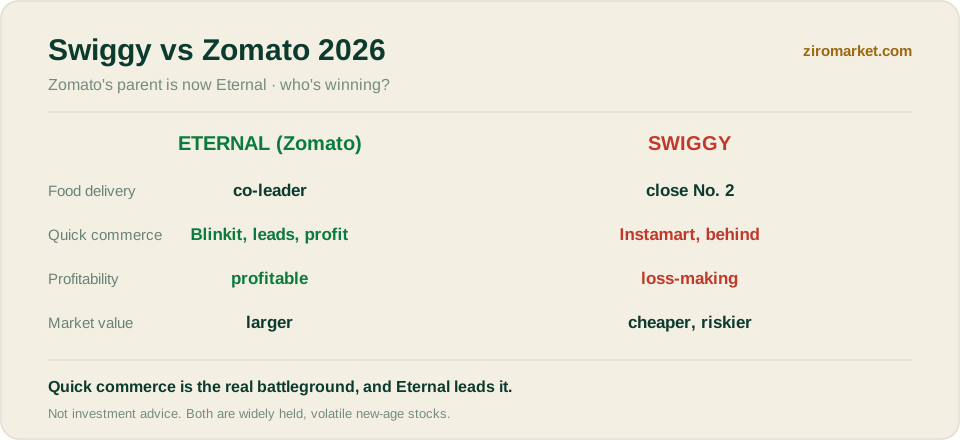
Here is how the two compare across the businesses that matter.
The pattern is consistent: Eternal leads on the measures that reflect a maturing, profitable business, while Swiggy leads on being the cheaper, higher-risk challenger. That is the choice the two stocks offer investors.
Where Eternal Leads
Eternal's edge is profit plus quick commerce. Its Blinkit arm turned profitable and leads the 10-minute delivery market, and the group as a whole has reached profitability, as our Eternal Q4 FY26 results coverage detailed when Blinkit crossed into the black. That combination of scale and profit is what gives Eternal the larger market value.
The diversification helps too. Beyond food delivery and Blinkit, Eternal has a going-out business and Hyperpure, its restaurant-supply arm, giving it more ways to grow. A broader, profitable base is a sturdier foundation than a single-engine growth story.
Where Swiggy Is Fighting Back
Swiggy is the challenger with something to prove. It is a close number two in food delivery and is investing heavily in Instamart to compete in quick commerce, but that spending keeps it loss-making overall. The bet is that catching up is worth the losses now.
Its appeal is the flip side of its risk. Swiggy trades at a lower valuation than Eternal, so if it can narrow the gap, especially in quick commerce, there is more room for its stock to re-rate. It is the higher-risk, higher-potential-reward side of the trade, provided the losses turn.
Quick Commerce Is The Battleground
Food delivery is largely settled; quick commerce is not. Because food delivery has matured into a steady two-player market, the bigger growth and the bigger difference between the two now comes from quick commerce, where Blinkit leads and Instamart trails, as our quick commerce war 2026 piece explains in full.
Why This Matters for Investors
The two offer different bets on the same theme. Eternal is scale and profitability at a premium price; Swiggy is a cheaper, catch-up story with more risk, so the choice depends on whether an investor wants the established leader or the challenger with more to prove. Both are pure-play bets on India's shift to ordering food and groceries online.
It is also a live case study in how new-age markets settle. Food delivery becoming a stable duopoly, while quick commerce stays a fierce fight, shows how these businesses mature at different speeds. For investors, that means the same two companies can be a steady bet in one segment and a high-stakes gamble in another, at the same time.
The rivalry shapes more than the two share prices. Between them, Swiggy and Eternal contract a vast delivery workforce and touch millions of restaurants and shops, so how they compete affects riders, merchants and consumers far beyond the stock market. Aggressive competition can mean better deals for customers but thinner economics for the companies, while a cosier duopoly means the opposite, a balance regulators watch and one more variable investors have to weigh.
For long-term investors, the key is that these are still young, fast-changing businesses. A lead in 2026 is not permanent: Swiggy could close the quick-commerce gap, or a new entrant could disrupt both. The scorecard today favours Eternal, but the game is far from over, which is exactly what makes the two of them such closely watched stocks.
Risks to Monitor
The clearest risk for Swiggy is that its losses persist or its quick-commerce gap widens, which would weigh on the stock.
A second risk, for both, is renewed competition in quick commerce from Zepto and deep-pocketed giants, which could reignite discounting and hurt margins.
The third is valuation. Eternal trades richly on its profitability, so any stumble could hit it, while Swiggy's discount reflects real execution risk. This is not a recommendation to buy or sell either stock. This is general information, not investment advice.
Swiggy versus Zomato in 2026 is a tale of two strategies: the profitable, diversified leader in Eternal, and the cheaper, hungrier challenger in Swiggy. Food delivery made them household names, but it is the quick-commerce battle that will decide which stock wins, and for now, Eternal is the one setting the pace.