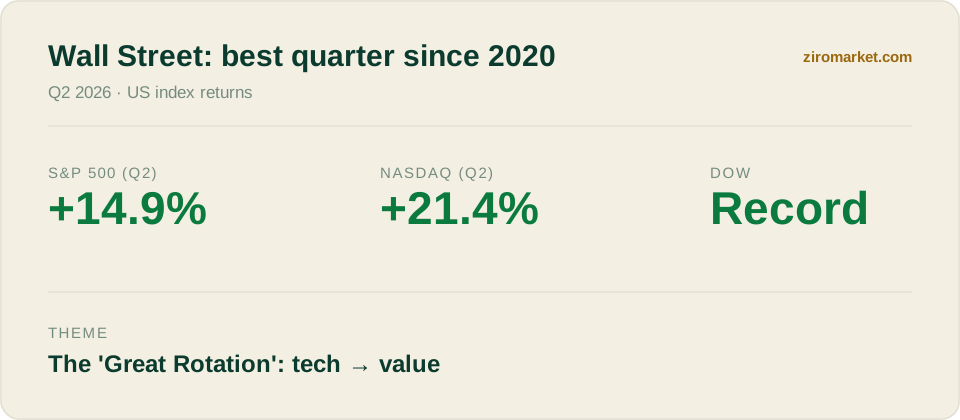
Wall Street just closed the books on a blockbuster quarter. The S&P 500 rose about 14.9% and the tech-heavy Nasdaq about 21.4% in the second quarter of 2026, their best quarter since 2020, while the Dow climbed to a new record high as a 'Great Rotation' shifted money out of pricey tech and into traditional blue chips. It was a powerful run, but the leadership within the market is quietly changing.
The headline gains tell one story; the rotation beneath them tells another. Even as indices set records, investors have started trimming the AI winners that led the rally and rotating into steadier names.
What Happened
The second quarter was one for the record books. The S&P 500 gained about 14.9% and the Nasdaq about 21.4%, marking their strongest quarter since the second quarter of 2020, when markets rebounded sharply from the pandemic crash. Here is how the major indices fared.
The twist is what has happened more recently. The Dow, packed with older, more traditional companies, has been climbing to records as investors rotate money out of high-flying tech and AI stocks into these steadier names. This 'Great Rotation' has persisted into the third quarter, with profit-taking money from tech flowing into value.
The AI trade, which powered much of the earlier rally, has wobbled as markets question whether the sector has become overbought. That is a notable shift from a market that rewarded AI names almost unconditionally.

Why This Matters for Investors
A record quarter is a strong signal, but the rotation matters more for what comes next. When leadership shifts from tech to value, it often signals investors are becoming more cautious about stretched valuations, spreading their bets rather than crowding into the same winners. That can make the market broader and more resilient, or it can be a warning that the easy gains are behind.
For global investors, including in India, a strong Wall Street usually supports risk appetite everywhere. Foreign flows, the dollar, and technology sentiment all take cues from the US, so a buoyant American market tends to lift the mood in emerging markets.
The rotation out of tech is the part Indian investors should watch most closely. Indian IT stocks take their cue from US technology sentiment and peers, so a cooling in the US AI trade can pressure names like TCS and Infosys, even as the broader market stays firm. You can follow the local picture on our Indian stock market today page.
What Investors Should Watch
The first thing to watch is whether the rotation continues. If money keeps flowing from tech into value, it points to a market that is broadening but also more wary of AI valuations, a theme that would shape leadership through the rest of 2026.
The second is US data and the Fed. A weak June jobs report has revived rate-cut hopes, and lower rates could either extend the rally or reshape which sectors lead, as covered in our Fed dot plot explainer.
The third is earnings. After a huge run, US corporate results need to justify the valuations, so the upcoming earnings season is a key test of whether the record quarter can be built upon.
Risks to Monitor
The clearest risk is a pullback after a strong run. Markets that rise this fast can be vulnerable to profit-taking, especially if earnings or data disappoint.
A second risk is the AI trade unwinding further. If the rotation out of tech accelerates, the heavily weighted AI names could drag the indices, given their size.
The third is the global read-through. A US wobble would ripple into emerging markets like India through flows and sentiment, so the strength of Wall Street is not a one-way support. This is general information, not investment advice.
Wall Street's best quarter since 2020 is a milestone, but the Great Rotation beneath it suggests a market in transition, from a narrow, tech-led rally to something broader and more selective. How that rotation plays out will shape not just US markets but the global sentiment that India trades on.