India's largest infrastructure conglomerate has been building at a pace that has no precedent in Indian corporate history. The Adani Group announced FY26 results showing a record Rs 1.52 lakh crore in capital expenditure across its portfolio companies, the highest annual capex ever recorded by an Indian corporate group, alongside all-time high EBITDA of Rs 94,834 crore. The total gross asset base of the Adani portfolio crossed Rs 7.85 lakh crore.
The numbers come against the backdrop of a group that spent much of 2023 managing the aftermath of the Hindenburg Research short report. The FY26 data suggests that the controversy, while damaging to market capitalisation in the short term, did not derail the group's underlying infrastructure execution.
Update, September 2026: Adani Green has crossed 20 GW of operational renewable capacity, the first Indian company to do so. See our Adani Green 20 GW breakdown.
What Happened
Adani Group released its consolidated FY26 portfolio performance data in early June 2026. The key financial metrics across all listed and unlisted Adani entities:
Capital expenditure of Rs 1.52 lakh crore (USD 16.1 billion), the highest annual capex by any Indian corporate. EBITDA of Rs 94,834 crore (USD 10 billion), an all-time high for the portfolio. Gross asset base of Rs 7.85 lakh crore (USD 82.8 billion).
Nearly 80% of the capex was directed toward energy, utilities, transport, and logistics businesses, consistent with the group's stated focus on hard infrastructure.
New assets commissioned in FY26 are substantial. In the energy vertical, 5.1 GW of renewable energy capacity entered operations, adding to Adani Green Energy's already significant clean energy fleet. Battery energy storage systems, critical for making intermittent solar and wind power reliable for the grid, expanded to 1.38 GWh commissioned in FY26, with further capacity additions bringing the running total to 3.37 GWh by June 2026.
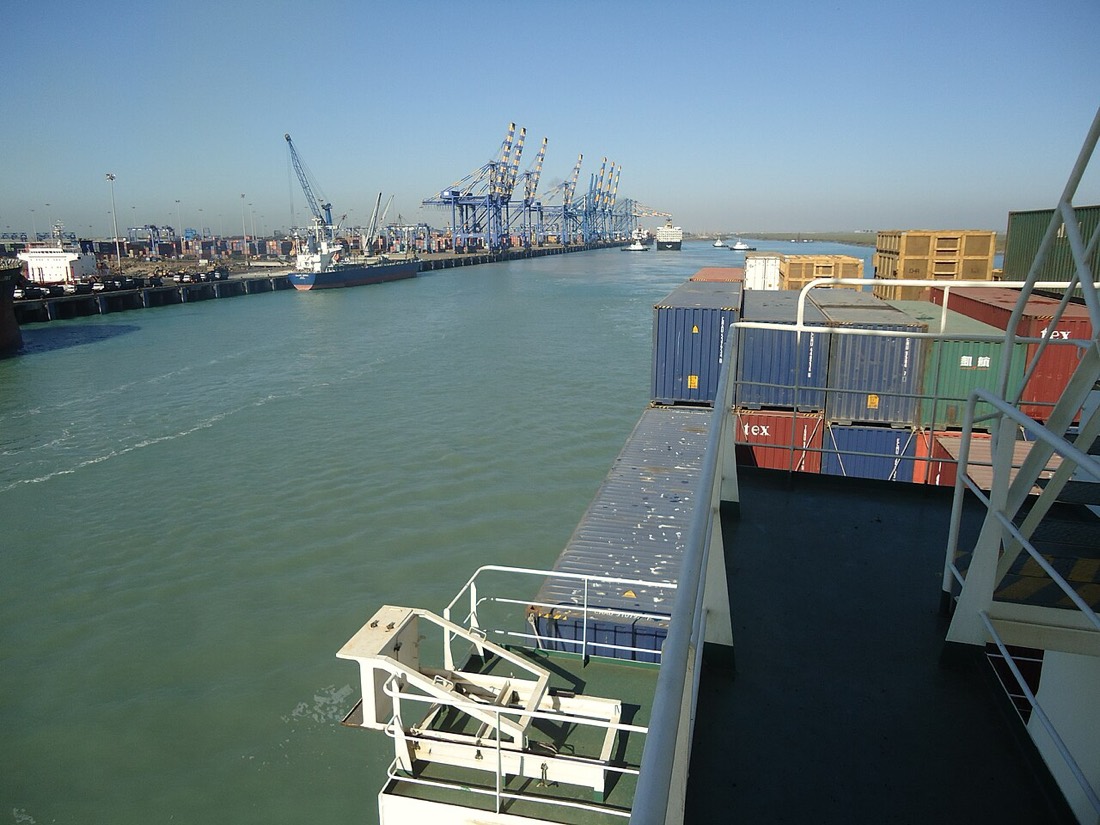
In transport and logistics, Navi Mumbai International Airport became operational, adding a second major airport to the Navi Mumbai region. The Guwahati Terminal was expanded, and the Ganga Expressway, connecting Prayagraj to Meerut in Uttar Pradesh over 594 km, opened in April 2026.
On June 9, 2026, Adani Energy Solutions signed a binding agreement to acquire 100% of IntelliSmart Infrastructure, one of India's largest smart metering companies. The acquisition makes AESL India's largest smart metering platform with 4.7+ crore smart meters under management, positioning the company as the infrastructure backbone of India's smart grid modernisation.
of Rs 1.52 lakh crore (USD 16.1 billion), the highest annual capex by any Indian corporate.
Why This Matters for Investors
Infrastructure creation at this scale has compounding economic effects. Every airport Adani opens enables more aviation commerce. Every GW of renewable energy reduces India's dependence on imported coal and oil. Every smart meter deployed helps electricity distribution companies reduce losses and improve billing accuracy, which is a critical structural fix for India's power sector economics.
For equity investors in listed Adani entities, EBITDA growth at Rs 94,834 crore means the cash generation engine of the group is at its highest point ever. Infrastructure businesses have very predictable long-term cash flows once assets are built: airports collect landing fees and commercial revenues, ports charge tonnage fees, toll roads charge per vehicle, and power transmission lines earn regulated returns. The record capex of Rs 1.52 lakh crore in FY26 is creating the asset base that will generate those predictable cash flows for the next 30 to 50 years.
The 80% capex concentration in energy, utilities, transport, and logistics is the Adani group's version of saying it believes the biggest returns in India over the next generation will come from owning physical infrastructure. At Rs 7.85 lakh crore in gross assets, the group is now one of the most significant infrastructure owner-operators in Asia.
The IntelliSmart acquisition fits into Adani's energy infrastructure strategy. Smart meters are a mandatory component of India's electricity distribution modernisation programme. The government has set targets for 250 million smart meters to be deployed across India. AESL, already a major power transmission company, is positioning itself as the company that runs the data layer of India's electricity distribution system.
Market Reaction
Adani group stocks, which had been under significant selling pressure following the Hindenburg report in early 2023, have recovered substantially from their 2023 lows. The FY26 financial data confirming record capex execution and EBITDA growth further supports the restoration of investor confidence.
The scale of the capex announcement, Rs 1.52 lakh crore, was received positively as evidence that credit markets are supporting Adani's expansion despite the 2023 controversy. Infrastructure companies require external financing for large projects, and the ability to raise capital at scale confirms lender confidence in the underlying asset quality.
Adani Enterprises, the group holding company and the most widely held Adani stock among retail investors, saw analyst upgrades following the FY26 capex and EBITDA disclosure.
What Investors Should Watch
Leverage levels and debt servicing capacity are the most important risk metrics for infrastructure conglomerates. The Adani group has historically carried significant debt as a ratio of EBITDA. Watch the net debt-to-EBITDA ratio across listed entities. At Rs 94,834 crore EBITDA, the group has more cash generation capacity to service debt than in earlier years, but the absolute debt quantum also increased with the Rs 1.52 lakh crore capex.
Navi Mumbai International Airport's ramp-up is a key operational milestone to watch in FY27. New airports require years of traffic build-up before they reach financial breakeven. The competitive positioning of Navi Mumbai Airport versus Mumbai's Chhatrapati Shivaji Maharaj International Airport, and whether airlines shift routes and slots, will determine how quickly the asset contributes meaningful EBITDA.
Renewable energy capacity utilisation, measured by plant load factor, is the metric that converts commissioned GW into actual EBITDA. A 5.1 GW addition is meaningful, but the revenue depends on how many hours those assets run at full capacity. Watch Adani Green Energy's quarterly plant load factor disclosures.
Risks to Monitor
Regulatory and governance risk remains elevated for the Adani group compared to most Indian conglomerates. The Securities and Exchange Board of India has ongoing investigations related to the 2023 Hindenburg allegations. Any new adverse regulatory finding could affect stock prices across Adani listed entities regardless of operational performance.
Concentration of infrastructure ownership creates systemic relevance but also political risk. Owning airports, ports, and power infrastructure simultaneously gives the Adani group enormous economic leverage, but it also means government policy changes in any of those sectors directly affect the group's financial projections. Regulatory tariff changes, contract renegotiations, or policy reversals in any major sector are tail risks for this conglomerate model.
Financing risk at this scale of capex is structural. Rs 1.52 lakh crore of annual capex cannot be entirely self-funded from Rs 94,834 crore of EBITDA after debt service. The group requires continued access to domestic and international bond markets, bank credit, and equity markets. Any tightening of those access channels, whether from global credit market shifts, domestic rate rises, or perception issues, could constrain the capex programme.
The Adani Group's FY26 performance data tells a story of execution at scale. Whether that execution translates into compounding shareholder value depends on whether the assets being built generate the long-term returns the capex models assume. With Rs 7.85 lakh crore in gross assets and growing, the Adani Group is now central to India's infrastructure story for the foreseeable future.