Crypto is stuck, and the reason is a standoff of its own. Bitcoin is rangebound near $63,000 as of July 30, 2026, with Ethereum near $1,800, caught between risk-off pressure from the US-Iran war and lingering hopes of US interest rate cuts. Neither force has won, so the price is drifting rather than trending.
It is a quiet stretch after a volatile one. Having swung with each twist of the Gulf conflict, crypto has settled into the $62,000 to $63,000 band while the market waits for a clearer signal.
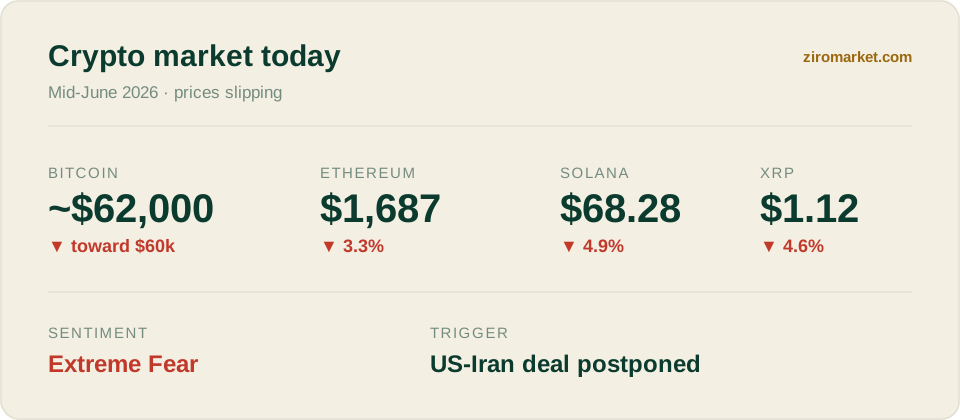
What Is Happening
Bitcoin has gone sideways after a stormy week. Trading near $63,000, it is holding the range it has kept through July, with Ethereum near $1,800. The sharp swings that came with each escalation of the US-Iran war have given way to a cautious drift.
The balance of forces explains the calm. On one side, the Strait of Hormuz standoff and the risk-off mood weigh on crypto as a high-beta asset. On the other, lingering hopes that soft US data will push the Fed toward rate cuts support it, since cheaper money favours risk assets. With the two roughly offsetting, Bitcoin goes nowhere fast.
The range itself has become the story. Bitcoin has repeatedly held above $60,000 through the month's volatility, a sign of underlying support, but it has also failed to break much above $64,000, capped by the geopolitical uncertainty.
Why This Matters
A rangebound Bitcoin reflects a market waiting for direction. When crypto neither rallies on rate-cut hopes nor crashes on war fear, it signals that investors are balancing the two rather than committing, which tends to precede a bigger move once one force wins out.
The macro backdrop remains the key driver. Crypto does best when liquidity is loose and risk appetite is high, so a calmer world plus confirmed rate cuts would be bullish, while a Hormuz escalation would likely break the range lower. The market is watching both closely.
For Indian investors, the swings come with a tax sting. India taxes crypto gains at an effective 34%, with a 1% TDS on transactions and no loss offset against other income, one of the harshest regimes globally, as our crypto tax India 2026 guide explains. That makes timing and risk management especially costly to get wrong.
What To Watch
The first thing to watch is the geopolitics. A de-escalation over the Strait of Hormuz could let rate-cut hopes lift crypto, while a sharp escalation could break the range lower.
The second is US data and the Fed. A soft inflation or jobs print could reassert the rate-cut tailwind and push Bitcoin toward the top of its range.
The third is whether Bitcoin holds $60,000. Defending the level keeps the range intact, while a break below it would suggest the risk-off mood is deepening.
Risks To Monitor
The clearest risk is a broad risk-off shock. A Hormuz closure or a spike in the dollar could pull crypto down alongside other risk assets.
A second risk is that rate-cut hopes fade. Stronger US data would weaken the macro tailwind just as the geopolitical headwind blows.
The third is a range break. Bitcoin has held $60,000 so far, but a decisive break either way could set the next trend. This is general information, not investment advice.
Bitcoin near $63,000 is a market in wait-and-see mode, balanced between the war and the Fed. The range has held all month, but with a live conflict on one side and rate cuts on the other, the next decisive move is a question of which force blinks first.