Home/Learn/Event
EventJune 19, 2026

Gold slides to $4,106 as a hawkish Fed lifts the dollar

Gold has slid to about $4,106 an ounce, down from its $5,602 record, as a hawkish Fed, a stronger dollar, and high yields weigh.

Explain like I'm 5: the simplest possible explanation, no finance knowledge needed

Gold's record-breaking run has gone into reverse. Gold has slid to about $4,106 an ounce in mid-June 2026, well below its all-time high of around $5,602 set in January, as a hawkish US Federal Reserve, a stronger dollar, and elevated Treasury yields drain the shine from the metal. The safe haven that everyone wanted at the start of the year is now the asset investors are trimming.

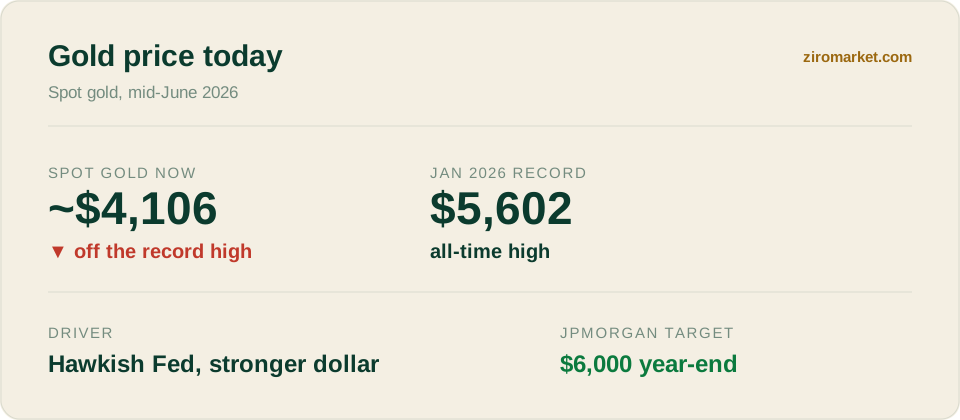
Gold price today: about $4,106 an ounce, down from the $5,602 January 2026 record, pressured by a hawkish Fed and a stronger dollar

The pullback is sharp, but the structural bulls have not given up. JPMorgan still sees gold reaching $6,000 by year-end, which frames the current slide as a correction within a longer bull market rather than the end of it.

~$4,106
Spot gold now
$5,602
Jan 2026 record
$6,000
JPMorgan year-end
Rs 1 lakh+
India per 10g

What Is Happening

Gold spent the first weeks of 2026 setting records, peaking near $5,602 an ounce on January 28 as Middle East conflict and record central bank buying drove a flight to safety. Since then the metal has retraced a large part of that surge, falling toward $4,106 as the macro backdrop shifted from fear to a focus on interest rates.

The turning point was the Federal Reserve. Under Chair Kevin Warsh, the central bank held rates but signalled it may need to raise them later in 2026 to tame inflation. A Fed leaning toward hikes is the single worst signal for gold, because gold pays no income and competes directly with interest-bearing assets. The hawkish turn also lifted the US dollar and pushed Treasury yields higher, a double blow for the metal.

Why This Matters

Gold's appeal rests on a simple trade-off: it offers safety and an inflation hedge, but no yield. When interest rates and the dollar rise, the opportunity cost of holding gold goes up, and money rotates into bonds and cash. That is exactly the dynamic playing out as the Fed signals higher-for-longer rates.

For Indian households and investors, gold is more than a trade. It is a savings habit, a wedding staple, and a currency hedge, since a weaker rupee lifts the local gold price even when the dollar price is flat. Gold crossing Rs 1 lakh per 10 grams in 2026 was a milestone, and even after the international pullback, Indian gold remains historically expensive.

The structural story has not vanished. Central banks bought a record 2,175 tons of gold in 2025 as they diversified away from the dollar, a durable source of demand that does not depend on the day-to-day rate outlook. This is the foundation of the bull case that JPMorgan and others still back.

What To Watch

The first thing to watch is US inflation and the Fed. If incoming data lets the Fed soften its hawkish stance, gold could rebound quickly, since much of the recent fall is about rate expectations rather than physical demand.

The second is the dollar. Gold is priced in dollars, so the currency's direction is a powerful near-term driver. A peak in the dollar would remove a major headwind for the metal.

The third is central bank buying. Quarterly data from the World Gold Council shows whether the structural demand that underpinned gold's rise is continuing. A slowdown in official buying would be the most bearish structural signal, while continued purchases support the long-term floor.

Risks To Monitor

The clearest near-term risk is that the Fed actually raises rates. Confirmed hikes would strengthen the dollar further and could push gold lower, deepening the correction from its record.

A second risk is a sharp reversal in safe-haven demand. If global tensions, including the Middle East situation, ease decisively, the fear premium that drove gold to $5,602 could keep unwinding.

The flip side is the upside risk for bears: any fresh geopolitical shock, a banking scare, or a dovish Fed pivot could send gold racing back toward its highs, as the metal has repeatedly shown it can move fast in both directions.

Gold at $4,106 sits between two powerful forces: a hawkish Fed pulling it down now, and a structural wall of central bank and safe-haven demand that has not gone away. Which one wins over the rest of 2026 is the question every gold investor is weighing.

Frequently Asked Questions

What is the gold price today?

Gold was trading at about $4,106 per ounce in mid-June 2026, having fallen after the US Federal Reserve signalled possible interest rate hikes later in the year. This is well below gold's all-time high of around $5,602 per ounce, set on January 28, 2026, but still far above its 2024 levels. Gold prices move constantly with the dollar, interest rate expectations, and global risk sentiment, so the exact figure changes day to day.

Why is gold falling in 2026?

Gold has been pulling back from its January 2026 record for three main reasons. First, the US Federal Reserve under Chair Kevin Warsh turned hawkish, signalling possible rate hikes, which makes non-yielding gold less attractive. Second, a stronger US dollar makes dollar-priced gold more expensive for other buyers, reducing demand. Third, elevated US Treasury yields offer a competing safe return that gold cannot match, since gold pays no interest.

What was gold's all-time high in 2026?

Gold reached an all-time high of about $5,602 per ounce on January 28, 2026, driven by Middle East conflict, record central bank buying, and strong institutional demand. It has since corrected to around $4,106 as macro conditions shifted and the Fed turned hawkish. Even after the fall, gold remains historically elevated, far above its long-term average and 2024 levels.

What is the gold price forecast for 2026?

JPMorgan has forecast gold reaching $6,000 per ounce by the end of 2026 and $6,300 in 2027, arguing that the current pullback is temporary. The structural bull case rests on continued central bank buying (which hit a record 2,175 tons in 2025), persistent geopolitical risk, and demand for inflation protection. Bears counter that a sustained hawkish Fed and strong dollar could keep gold under pressure in the near term. Forecasts are not guarantees.

What is the gold price in India and how can I invest?

Indian gold prices track the international price plus the rupee exchange rate and import duties. Gold crossed Rs 1 lakh per 10 grams for the first time in 2026 and remains historically high even after the international pullback. Indians can invest through Sovereign Gold Bonds (the most tax-efficient, paying 2.5% annual interest plus the gold price return), Gold ETFs (like Nippon India or HDFC Gold ETF), digital gold, or physical jewellery and coins. This is general information, not investment advice.

Also Read
EventIndian IT stocks crash up to 8% after Accenture's warning
EventNifty snaps 4-day rally as IT stocks crash on Accenture
EventReliance Jio files for India's biggest-ever IPO
Get the app

Track it all in Ziro Market.

Free. iOS and Android. Built for Indian markets.

App Store →Play Store →