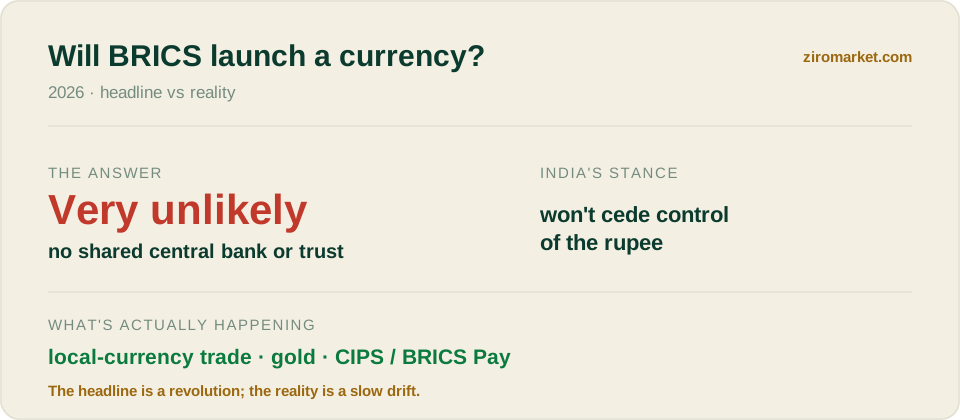
The idea of a BRICS currency to dethrone the dollar makes for dramatic headlines, and it resurfaces at every BRICS summit. The reality is far less dramatic: BRICS is very unlikely to launch a common currency in 2026 or any time soon, because a shared currency needs a common central bank, fiscal rules and trust the bloc does not have, and India has publicly opposed ceding control of the rupee. What is actually happening is quieter and slower: more trade in local currencies, record gold buying, and new payment systems.
Separating the headline from the reality is the whole point here, because the gap between them is enormous. It is educational, not investment advice.
What is the "BRICS currency" idea?
The concept is a shared currency for the bloc to trade in, instead of the US dollar. The appeal is straightforward: if BRICS nations could invoice trade and hold reserves in a common currency, they would reduce their exposure to the dollar and to US sanctions, the same motivation behind the wider de-dollarization trend our de-dollarization in 2026 piece covers. The comparison people reach for is the euro.
But the euro is exactly why the idea is harder than it sounds. It took Europe decades of integration, a shared central bank, and binding fiscal rules to launch, and it still needed a crisis to hold together. BRICS has none of that.
Will it actually happen in 2026?
The short answer is no. Here is the dream against the reality.
The single biggest blocker is that a currency union requires giving up control of your own money, and no major BRICS member, least of all India, is willing to do that. A shared currency would likely be dominated by China, the bloc's largest economy, which is a non-starter for India given the two are rivals.
Why a common currency is so hard
A currency union is not just a logo on a note; it is a deep political commitment. It requires a shared central bank to set one interest rate for everyone, common rules on deficits and debt, and enough trust for sovereign nations to accept decisions made collectively. BRICS spans democracies and autocracies, sanctioned and open economies, and rivals and partners, which makes that shared framework almost impossible to build.
Even the members' economies pull in different directions. A single interest rate that suits China's slowdown would not suit India's faster growth, and a currency shared with sanctioned economies like Russia and Iran would import their risks. Those are structural obstacles, not paperwork.
What BRICS is actually doing instead
The real project is incremental de-dollarization, not a new currency. BRICS members are settling more trade in local currencies like the rupee and yuan, building payment systems such as China's CIPS and the proposed BRICS Pay to bypass the dollar-based network, and buying record amounts of gold for reserves, as our central banks buying gold piece details. These moves chip at the dollar's role without trying to replace it wholesale.
India embodies this middle path. It pushes rupee-based trade settlement and diversifies its reserves, but firmly rejects a shared BRICS currency, treating the bloc as a platform for trade and a multipolar world rather than monetary union.
What it means for India and investors
For investors, the takeaway is to ignore the headline and watch the trend. A BRICS currency is not coming, so it will not suddenly upend the dollar or the rupee; the change that matters is the slow, structural drift toward local currencies and gold, which supports gold demand and, over years, a more multi-currency world. That is a marathon, not a market event.
There is also a deterrent in the background. Threats of steep US tariffs on any bloc that tries to sideline the dollar have made members even more cautious about a formal common currency, reinforcing the preference for quiet, bilateral de-dollarization over a headline-grabbing BRICS coin.
Risks to monitor
The clearest risk to this view is escalation. A major sanctions or trade shock could push BRICS to integrate faster than expected, though even then a full currency union would take years.
A second is overreading the rhetoric. Summit declarations about de-dollarization are often aspirational, so treating every statement as imminent policy leads to bad conclusions.
The third, for investors, is confusing the trend with the timeline. De-dollarization is real and supports gold, but it is gradual, and betting on a sudden dollar collapse or a BRICS currency has repeatedly been a losing trade. This is general information, not investment advice.
So will BRICS launch a common currency in 2026? No, and probably not for a long time. The bloc wants less dependence on the dollar, but it wants to keep control of its own money even more, and those two desires point away from a shared currency and toward the slow, unglamorous work of trading in local currencies and stacking gold. The headline is a revolution; the reality is a drift.