China's economy entered 2026 with a strong export performance that surprised many analysts who had been bearish on the world's second-largest economy. China's GDP grew 5% year-on-year in Q1 2026, meeting its full-year target range of 4.5 to 5%, driven by a record 18% surge in total trade to $1.69 trillion and industrial output that outpaced consumption. The data was released in April 2026 alongside the launch of China's 15th Five-Year Plan, signalling Beijing's priorities for the 2026 to 2030 economic cycle.
The headline growth figure, however, conceals a structural imbalance that has defined China's economy for several years: the engine of growth is factories and exports, not the Chinese consumer. Domestic consumption remains weak, deflation persists across broad goods categories, and the property market continues its long-running correction. China is growing, but in a way that creates global competitive pressure rather than global demand.
What Happened
China's National Bureau of Statistics reported Q1 2026 GDP growth of 5% in April 2026. The breakdown reveals the export-centric nature of the growth:
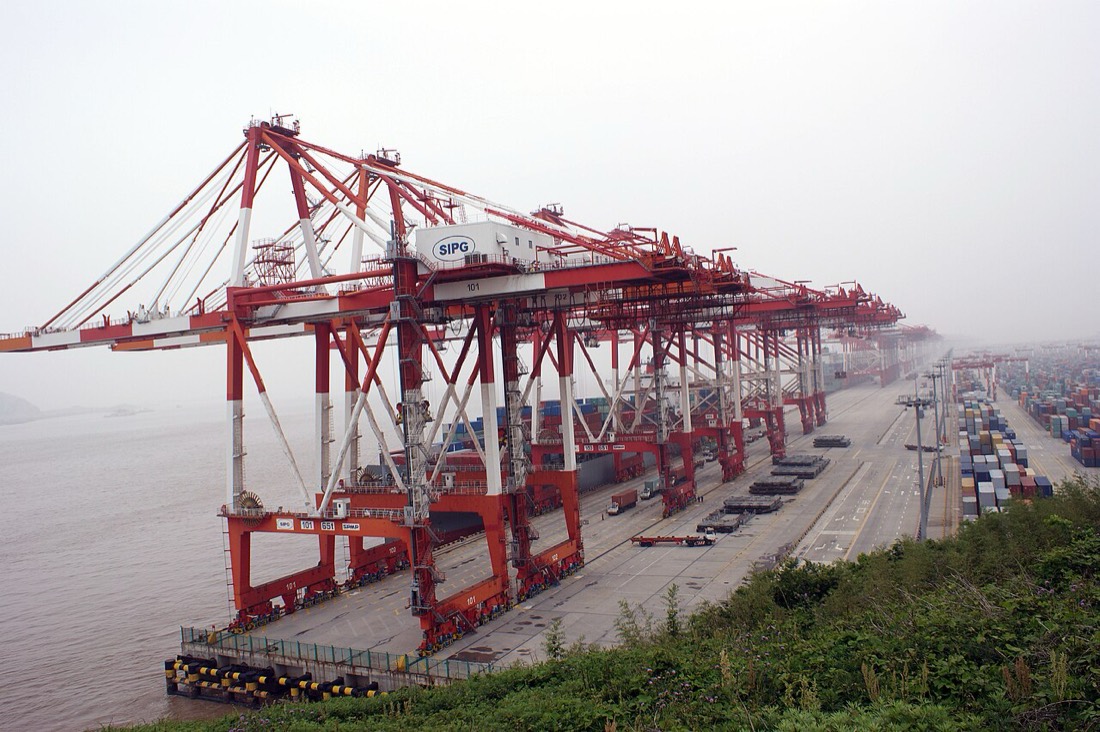
Trade: Total two-way trade grew 18% to $1.69 trillion in Q1 2026. Exports grew 14.7% year-on-year, driven by electric vehicles, solar panels, batteries, machinery, and electronics. Imports surged 22.7%, reflecting strong commodity demand for industrial production inputs.
Industrial output was the key domestic driver, with factories producing at elevated rates for both export markets and domestic investment.
Domestic consumption remained the weak link. Consumer price inflation in China has been near zero or negative for much of 2025 and into 2026, indicating excess supply relative to domestic demand. Housing market sentiment, while stabilised from the 2022-2024 crisis levels, has not recovered to the point where property wealth is driving consumer spending.
China's 15th Five-Year Plan (2026-2030) was announced alongside the Q1 GDP data. The plan's overarching theme is supply-side-driven strategic growth: technology self-sufficiency in semiconductors, AI, electric vehicles, and advanced manufacturing; risk management of external economic shocks; and industrial upgrading rather than broad consumer stimulus. The message from Beijing is that China will compete on technology and manufacturing excellence rather than stimulate its way to growth.
Goldman Sachs revised its full-year 2026 China GDP forecast upward following the strong Q1, citing export resilience and industrial output outperformance.
Why This Matters for Investors
China's Q1 2026 performance creates a complex backdrop for global equity investors. The export surge confirms China remains a dominant manufacturing and export power despite US tariffs and Western supply chain diversification efforts. The weakness in domestic consumption confirms that China is not a reliable source of global demand growth in the near term.
For India's equity market, China's performance is both competitive threat and opportunity. Chinese exports at 14.7% growth put pressure on Indian exporters who compete in the same global markets, textiles, chemicals, pharmaceuticals, and engineering goods are areas of direct competition. Chinese electric vehicles, solar panels, and batteries, sold globally at prices that reflect China's scale economies, compete with India's nascent domestic manufacturing in those sectors.
The opportunity is structural: the US, Europe, and other Western nations are actively trying to reduce supply chain dependence on China. India's Production-Linked Incentive (PLI) scheme is specifically designed to attract manufacturing that is leaving China or that companies do not want to expand in China. Apple's iPhone assembly expansion at Tata Electronics in Tamil Nadu, semiconductor investments under India Semiconductor Mission 2.0, and solar panel manufacturing under the PLI are all capturing this diversification trend.
The China-India economic competition narrative matters for foreign investors choosing emerging market allocation. FPIs allocating to Asia must choose between China and India (among others) in their portfolios. China's strong Q1 GDP versus India's weak equity market performance in 2026 creates a relative value question: is China currently the better emerging market bet, or is India's structural growth story better positioned for the next five years?
Market Reaction
Chinese equity markets, the Shanghai Composite and Hang Seng, reacted positively to the Q1 GDP beat relative to expectations, with both markets gaining in the days following the data release. Chinese equities had been under pressure in 2025 from a combination of property sector concerns and geopolitical risk premium, and the Q1 data provided relief.
For Indian equity markets, the China GDP data was a secondary concern. The FPI selling pressure on India in early 2026 was driven more by the Iran oil shock, the weak rupee, and Nifty valuations than by a choice between India and China. However, as Chinese growth shows resilience while India's market corrects, some FPI allocation rotation from India to China has been noted by market participants.
Commodity markets responded to China's strong industrial output and import surge. Base metals like copper and iron ore, which are heavily used in Chinese manufacturing and infrastructure, saw price support from the import data. India's metal sector companies, Tata Steel, Hindalco, JSW Steel, are affected by both the competition of cheap Chinese metal exports and the input cost dynamics driven by Chinese commodity demand.
What Investors Should Watch
China's Q2 and Q3 2026 data will test whether the Q1 export surge is sustainable. US tariff uncertainty, potential US recession risks, and European trade policy toward Chinese EVs and panels could all moderate export growth in H2 2026. Watch for China's quarterly data releases in July and October 2026.
The property market recovery in China is the key domestic consumption unlock. If Chinese home prices stabilise and transaction volumes pick up in Tier 1 cities, household wealth improves and consumer confidence could return. Beijing has been selectively supporting the property market, but the scale of the 2021-2024 correction means full recovery is years away.
India's PLI scheme execution metrics are the key indicator of whether India is successfully capturing the supply chain diversification from China. Watch for announcements of new production milestones, export targets achieved, and foreign direct investment into PLI sectors.
Risks to Monitor
China's export surplus creates trade war escalation risk. A 14.7% export growth surge while Chinese domestic consumption is weak means the export surplus widens. This creates friction with all of China's major trading partners, the EU, US, Japan, Korea, and increasingly India. Trade retaliation from these partners in the form of anti-dumping duties, safeguard measures, or tariff increases would slow China's export machine. India itself has imposed anti-dumping duties on Chinese steel and chemical imports.
Chinese AI and technology competition is the longer-term structural concern for India's tech sector. China's 15th Five-Year Plan prioritises AI and semiconductor self-sufficiency. If Chinese AI models and software services become globally competitive, they would compete with Indian IT services in global markets, particularly in lower-complexity automation tasks that are currently delivered by Indian IT labour.
Currency risk: China has allowed the yuan to depreciate modestly to support export competitiveness. A sharp yuan depreciation would make Chinese exports even cheaper globally, increasing competitive pressure on Indian exports and on Indian manufacturers competing with Chinese goods domestically.
China at 5% GDP growth is a resilient competitor, not a collapsing one. The global economic story of 2026 is not China collapsing but China growing in a way that intensifies competition while creating supply chain opportunity. For India, navigating this requires executing on PLI manufacturing, managing bilateral trade friction with China, and ensuring India's own growth story remains compelling enough to attract FPI capital that has multiple emerging market choices.