India did not ban crypto. It did something that, for many traders, stings almost as much: it taxed it harder than almost anywhere on earth. Crypto gains are taxed at a flat 30% plus cess, a 1% TDS is skimmed off every sale, and you can deduct nothing but your purchase cost, with losses that cannot be set off against anything. Understanding these rules before you trade is the difference between a clean return and a nasty reckoning at filing time.
The framework arrived in 2022 and has only tightened since, with the new Income Tax Act, 2025 carrying it forward from April 1, 2026 largely intact.
The three rules that define it
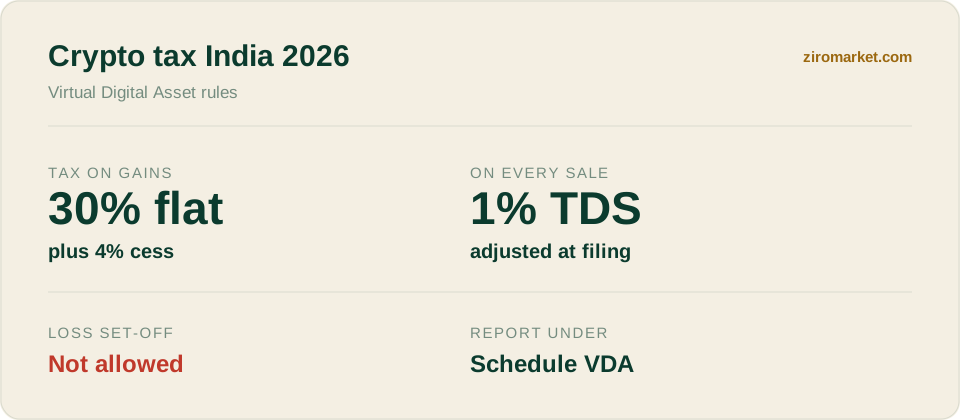
Almost everything about Indian crypto tax flows from three hard rules. First, a flat 30% rate on any gain from transferring a Virtual Digital Asset, with no slab benefit and no lower long-term rate, plus surcharge and a 4% cess on top. Whether you held Bitcoin for a day or three years, the rate is the same.
Second, a 1% TDS on the sale value above a threshold, deducted automatically by Indian exchanges. It is not an extra tax but an advance that adjusts against your final bill, designed mainly to give the tax department a trail of every transaction.
Third, and most painful, is the treatment of losses. Here is how it plays out.
You are taxed on your winners and get no relief for your losers, because VDA losses cannot be set off against other VDA gains, against other income, or carried forward.
Here is one trade worked through, using round numbers close to September 2026 prices.
TDS applies once your crypto sales cross Rs 50,000 in a financial year for most individuals, or Rs 10,000 for others. Exchange fees, gas fees and the interest on any money borrowed to buy crypto are not deductible, which is why the effective rate on active trading ends up higher than the 31.2% headline.

Why it is called the harshest regime
Compare this with equity. A stock investor gets a lower long-term rate, a Rs 1.25 lakh annual exemption, and the right to offset losses against gains, as covered in our capital gains tax 2026 guide. A crypto investor gets none of those cushions, which is why the effective burden on active crypto trading in India is unusually heavy.
The 1% TDS adds a second layer of friction. For high-frequency traders, having 1% shaved off the value of every sale ties up capital and eats into the compounding that active trading relies on, even though it is eventually adjusted. It is a deliberate drag, and it has visibly pushed volumes toward less-taxed venues.
What changed for 2026
The rates did not move, but the rulebook did. The Income Tax Act, 2025, effective April 1, 2026, renumbers the old sections, explicitly folds "crypto-asset" into the VDA definition, and adds a dedicated penalty regime for reporting failures. In practice that means the tax you pay is the same, but the consequences of not reporting correctly are sharper.
Reporting itself runs through Schedule VDA in the income tax return, with ITR-2 for those declaring capital gains and ITR-3 for those treating crypto as a business. Every transaction has to be disclosed, and the TDS already deducted is claimed back there. For the wider policy picture, including SEBI and RBI's stance, see our India crypto regulation 2026 explainer, and for live prices our bitcoin price today page.
None of this makes crypto illegal, and plenty of Indians still trade it. But the tax code has made one thing unmistakable: in India, crypto is taxed as if the government would rather you thought twice, and the smart move is to price that 30%, that 1%, and that missing loss set-off into every decision before you make it.