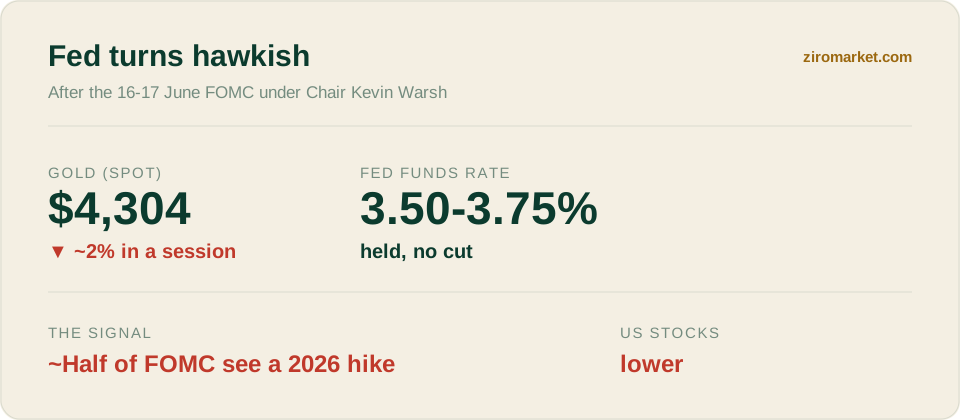
The world's central banker delivered a jolt, and gold felt it first. Gold fell close to 2% to about $4,304 an ounce by June 18, 2026, and US stocks slipped, after the Federal Reserve held interest rates but signalled that roughly half its members now expect a rate hike this year. It was the opposite of what markets wanted to hear, and the reaction rippled across gold, equities, and the dollar.
The surprise came from the Fed's new chair, Kevin Warsh, whose first meetings have set a more hawkish tone than markets expected. The message was clear: the fight against inflation is not over, and rate cuts are not coming soon.
What Happened
At its June 16-17 meeting, the Fed kept the federal funds rate at 3.50 to 3.75%, as widely expected. The shock was in the projections. Roughly half of FOMC members indicated it may be necessary to raise rates this year, a hawkish stance driven by fears that core inflation will run hotter than hoped because of the Middle East war's effect on energy and prices.
Warsh reinforced the message. He declined to give specific guidance on the next move but stressed that inflation has stayed above the central bank's 2% target for several years and reiterated the Fed's commitment to restoring price stability. For a market that had been pricing in cuts, the prospect of hikes was a genuine reversal.
Gold took the hit immediately, sliding nearly 2% toward $4,304. US stocks fell as investors repriced for a tougher Fed. The dollar firmed, and attention turned to upcoming data, including the Philadelphia Fed manufacturing index, for clues on whether the hawkish tilt will harden into actual hikes.
Why This Matters for Investors
Gold and interest rates move in opposite directions for a simple reason. Gold pays no income, so when rates rise or are expected to rise, interest-bearing assets like bonds become more attractive, and a stronger dollar makes gold pricier for global buyers. Both forces hit gold at once when the Fed turned hawkish, which is why a single signal produced a sharp move.
For equity investors, the implication is broader. Higher rates raise borrowing costs and reduce the present value of future company profits, which weighs on stock valuations, especially for high-growth names. The market had been leaning on the hope of rate cuts, and the Fed just took that crutch away, forcing a rethink of how richly stocks should be valued.
This also marks a notable shift from the Fed's earlier tone. The central bank had been moving toward a neutral stance, but the persistence of inflation, fed by the Middle East conflict, has pushed it back toward considering hikes. A Fed that is thinking about hikes rather than cuts changes the backdrop for every asset class, from bonds to gold to emerging market currencies.
Market Reaction
The reaction was textbook risk-off for rate-sensitive assets. Gold fell, US stocks dropped, and the dollar strengthened, the classic response to a hawkish surprise. The sharpness of gold's move shows how much the market had been positioned for an easier Fed, leaving it exposed when the signal flipped.
Interestingly, the hawkish Fed did not drag every market down. Indian equities rose on the same day, because falling oil prices from the Iran peace deal mattered more for India than the Fed's path. The split is a reminder that local drivers can override global ones, even one as powerful as the Fed.
What Investors Should Watch
The first thing to watch is the incoming US inflation and jobs data. The Fed has tied its hawkish stance to the risk of higher inflation, so each new data point will either confirm or soften the case for 2026 hikes. A cooler inflation reading would ease the pressure on gold and stocks.
The second is the oil price. The Fed's inflation worry is partly about energy, so if the Iran peace deal keeps oil low, the inflation threat fades and the Fed may not need to hike after all. Oil and the Fed are now linked in the inflation story.
The third, for gold specifically, is the dollar. Gold's next move depends heavily on whether the dollar keeps strengthening on hawkish expectations, so the currency markets are the place to watch for early signals on where gold goes from here.
Risks to Monitor
The main risk for gold bulls is that the Fed follows through with actual hikes. If hikes materialise, the dollar would strengthen further and gold could fall more, unwinding part of the extraordinary rally that took it to a record above $5,600 earlier in 2026.
For equities, the risk is a sustained higher-for-longer rate environment. If the Fed holds rates high or raises them while growth slows, the combination would pressure both valuations and earnings, a difficult mix for stock markets.
The wildcard remains the Middle East. The Fed's hawkishness is rooted in war-driven inflation, so a durable Iran peace deal that lowers oil could quickly defuse the inflation threat and flip the Fed back toward patience, which would be supportive for gold and stocks alike.
Gold's slide on June 18 is a snapshot of a market adjusting to a Fed that is more worried about inflation than growth. The next few weeks of data will decide whether this hawkish signal becomes a hawkish reality, and gold will be among the first to tell us.
Frequently Asked Questions
What is the gold price on June 18, 2026?
About $4,304 per ounce, after falling close to 2% in the prior session on the Fed's hawkish signal. Gold remains far above 2024 levels but below its January 2026 record of around $5,602.
What did the Fed signal in June 2026?
It held rates at 3.50 to 3.75% but roughly half of FOMC members indicated a possible 2026 hike, citing Middle East war inflation risk. Chair Kevin Warsh stressed the commitment to bringing inflation back to 2%.
Why does a hawkish Fed push gold down?
Gold pays no interest, so higher expected rates make bonds more attractive and tend to strengthen the dollar, making dollar-priced gold costlier for other buyers. Both pushed gold lower.
How did US stocks react?
They fell. Markets had hoped for cuts, so the prospect of higher rates, which raise borrowing costs and lower the value of future profits, weighed on shares.
What does this mean for Indian investors?
A hawkish Fed can strengthen the dollar and pressure the rupee, but India rose on June 18 as falling oil outweighed the Fed worry. Indian gold prices may ease if global gold keeps falling, though a weaker rupee could offset part of it.