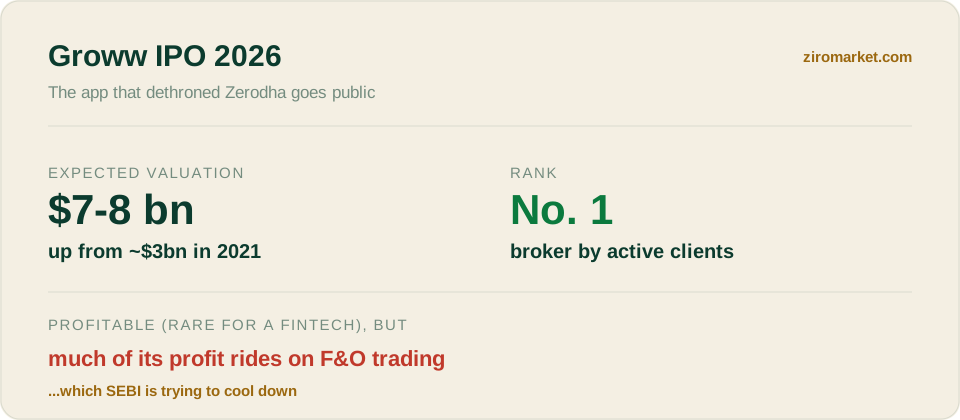
The app that changed how young India invests is about to let the public invest in it. Groww, which overtook Zerodha to become India's largest broker by active clients, is heading for a 2026 IPO at a valuation expected around $7 to $8 billion. It is one of the most anticipated fintech listings of the year, and, unusually for a startup, it is a story about a company that actually makes money.
Groww's rise is the retail-investing boom in one company. If you want a single bet on tens of millions of Indians opening demat accounts and trading from their phones, this is close to a pure one.
What We Know
Groww has come a long way fast. From a standing start, it became the number-one broker on the NSE by active clients, overtaking the pioneer Zerodha, on the back of a simple app that won over first-time and younger investors. That user base is the foundation of the IPO story.
The valuation jump tells the story. Groww last raised private money at around $3 billion in 2021, and it is now expected to seek roughly $7 to $8 billion in its 2026 listing, reflecting how much its users, revenue and profit have grown since. It joins a busy pipeline of new-age IPOs, alongside the likes of the Zepto IPO and the PhonePe IPO.
The profitability is what sets it apart. Where many consumer-tech companies list while still losing money, Groww goes public as a profitable business, which changes how investors can value it, on earnings rather than just on growth and hope.
How Groww Makes Money
The engine is brokerage, and a lot of it is F&O. Groww earns most of its revenue from fees on trades, with a large share coming from the high-volume futures and options segment, plus flat fees on delivery trades and smaller amounts from mutual funds and margin funding.
Here is roughly where the money comes from.
The Retail Boom Behind It
Groww is a bet on a structural shift. India has added demat accounts at a record pace, crossing 231 million by mid-2026, as young, first-time investors pour into the market, as our demat accounts at 231.5 million coverage detailed. Groww has captured a huge share of exactly those users.
That trend is powerful but not guaranteed. A long bull market has drawn people in; a prolonged downturn could slow account openings and trading, which would weigh on brokerage revenue. The retail boom is Groww's tailwind, but it is also a cycle, and the IPO is arriving after several strong years.
The scale of the shift is easy to underestimate. A decade ago, investing in Indian stocks was mostly the preserve of the wealthy and the professional; today a college student in a small town can open an account and buy a share in minutes. Groww built its brand on making that leap feel simple, which is why it captured so many first-time users. Its IPO is, in a sense, the retail-investing generation coming full circle: the people who learned to invest on the app are now being offered the chance to invest in it.
Why This Matters for Investors
Groww is a rare profitable new-age listing. Because it makes money, it can be valued on earnings, which makes it a cleaner story than the loss-making consumer-tech IPOs that ask investors to price the future, a contrast with names still chasing profitability. For the market, it is a test of how a mature, profitable fintech is valued versus a growth-at-all-costs one.
It is also deeply relevant to the very people likely to read about it: retail investors. Groww is the tool millions use, so its listing is a chance to own a piece of the platform behind their own investing, and a window into how the business that serves them actually earns. Those weighing it should understand both the growth and the F&O dependence before forming a view.
Risks to Monitor
The clearest risk is F&O regulation. Since futures and options brokerage is a major revenue source, SEBI's push to curb retail F&O trading could dent Groww's earnings.
A second risk is competition. Zerodha, Angel One, Dhan and others compete hard on price and features, which can pressure brokerage rates over time.
The third is the market cycle. A downturn that reduces trading activity and slows new account openings would hit revenue, since Groww's fortunes are tied to how actively Indians invest. This is general information, not investment advice.
Groww going public is a milestone for India's retail-investing generation: the app that taught millions to trade is now asking them to become its shareholders. The business is real and, rare for a startup, profitable. The question every investor will have to weigh is how much of that profit rests on a trading frenzy that the regulator is determined to calm.