Bitcoin is doing the one thing it almost never does: staying still. It has traded near $63,000 for weeks, roughly half its all-time high of about $126,200 from late 2025, as bullish and bearish forces cancel each other out. For an asset built on volatility, a long, quiet range is itself a signal that a bigger move is building. The question for the second half of 2026 is which way it breaks.
A rangebound bitcoin means the market is waiting for a catalyst. Here is what could finally tip the balance, in either direction.
Why Bitcoin Is Stuck
The range is a tug-of-war. On one side, hopes of US Fed rate cuts and steady long-term adoption support the price; on the other, ETF outflows, a firm dollar, and risk-off pressure from the Gulf weigh on it. With the two roughly matched, bitcoin drifts rather than trends, holding the $60,000 to $64,000 band it has kept for weeks, as our bitcoin price today page tracks.
The ETF story has been the biggest drag. Steady outflows from spot bitcoin ETFs, led by the large US funds, pulled demand out of the market through 2026, as our bitcoin ETF outflows coverage detailed. When the biggest buyers turn into sellers, even good news struggles to move the price.
What Could Break It Out
Several catalysts could tip bitcoin higher. The most important is the US Fed: a clear signal of rate cuts would add liquidity and lift risk assets, and bitcoin tends to move with that tide, as our US Fed decision July 2026 piece explains. Cheaper money has historically been rocket fuel for crypto.
The second is ETF flows turning positive. If the outflows reverse into inflows, the demand that drove bitcoin to its 2025 record would return. The third is regulatory clarity, which encourages institutions to allocate, and the fourth is the familiar post-halving cycle following the 2024 halving, which has historically preceded major rallies. If several line up, a retest of the $126,200 peak comes into view.
What Could Break It Down
The bearish case is just as real. A hawkish Fed that keeps the dollar strong would pressure bitcoin, as would continued ETF outflows and any broad risk-off shock, such as an escalation in the Strait of Hormuz standoff. In a flight to safety, high-volatility assets like crypto are usually sold first.
Bitcoin dominance is also elevated, meaning money is huddling in bitcoin rather than spreading into altcoins, a defensive posture covered in our bitcoin dominance and altcoin season piece. That pattern often accompanies caution rather than the risk appetite a rally needs.
What bitcoin does also decides the fate of the rest of crypto. In a risk-off range, money stays parked in bitcoin and altcoins languish, but a decisive bitcoin breakout has historically been the trigger for an altcoin season, when smaller tokens like Ethereum, Solana and XRP outperform. So the range-break question is bigger than bitcoin alone: it decides whether the entire crypto market wakes up in H2 2026 or stays asleep. That is why traders watch the $64,000 ceiling and the $60,000 floor so closely.
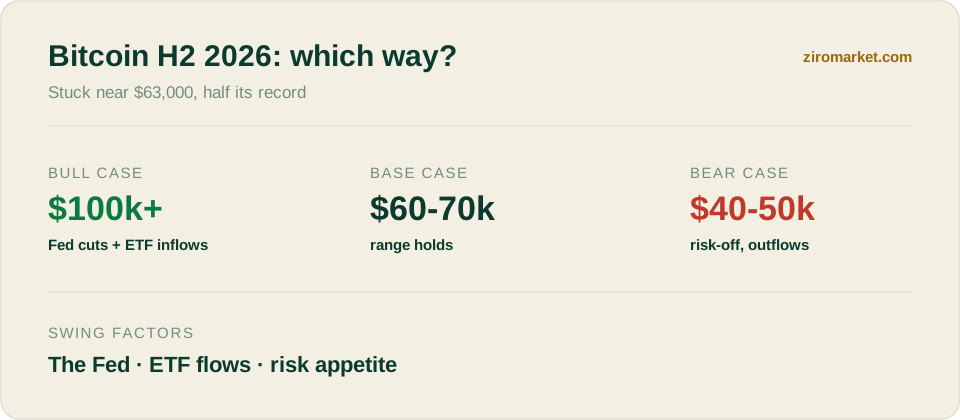
The Scenarios
Here is a simple way to frame the next six months.
For Indian Investors
The tax math matters as much as the price. India taxes crypto gains at an effective 34%, with a 1% TDS on transactions and no loss offset against other income, one of the harshest regimes globally, as our crypto tax India 2026 guide explains. That makes mistimed trades especially expensive here.
It also changes the strategy. With a flat 30% tax and no loss set-off, the frequent trading that some use to play a range is heavily penalised, which is why many Indian holders take a longer view rather than trying to trade every swing.
Risks to Monitor
The clearest risk is a hawkish Fed or a stronger dollar, which would pressure bitcoin and could break the range lower.
A second risk is continued ETF outflows, which would keep demand weak no matter what else improves.
The third is a broad risk-off shock, where crypto tends to fall hardest and fastest. This is general information, not investment advice.
Bitcoin near $63,000 is a coiled spring, held between rate-cut hopes and a wall of outflows. The catalysts are known; the timing is not. Whether the next big move retests the record or revisits $40,000 will come down to the Fed, the ETF flows, and whether the world stays calm enough for investors to reach for risk again. And if you are weighing it as a safe haven, our Gold vs Bitcoin 2026 comparison puts "digital gold" next to the real thing.