India's three largest IT companies have made a collective bet that artificial intelligence tools are not just an efficiency upgrade but a competitive necessity. On June 3, 2026, Microsoft confirmed that TCS, Infosys, and Wipro each have over 100,000 Microsoft 365 Copilot licences in active deployment, with the three firms collectively crossing 300,000 seats in under six months from their initial rollouts. Microsoft called it one of the largest and fastest enterprise AI deployments in any ecosystem globally.
The announcement came the same week Goldman Sachs downgraded TCS, Infosys, and Tech Mahindra from its coverage universe, citing valuations that look stretched against a backdrop of slowing industry revenue growth. The contrast illustrates the central tension in India's IT sector right now: strong AI adoption as a productivity and differentiation story, against a near-term growth rate that has decelerated to single digits.
What Happened
Microsoft disclosed that TCS, Infosys, and Wipro each license Microsoft 365 Copilot for more than 100,000 employees as of June 2026. The combined deployment of over 300,000 active seats represents the largest known cluster of enterprise Copilot users in a single industrial ecosystem.
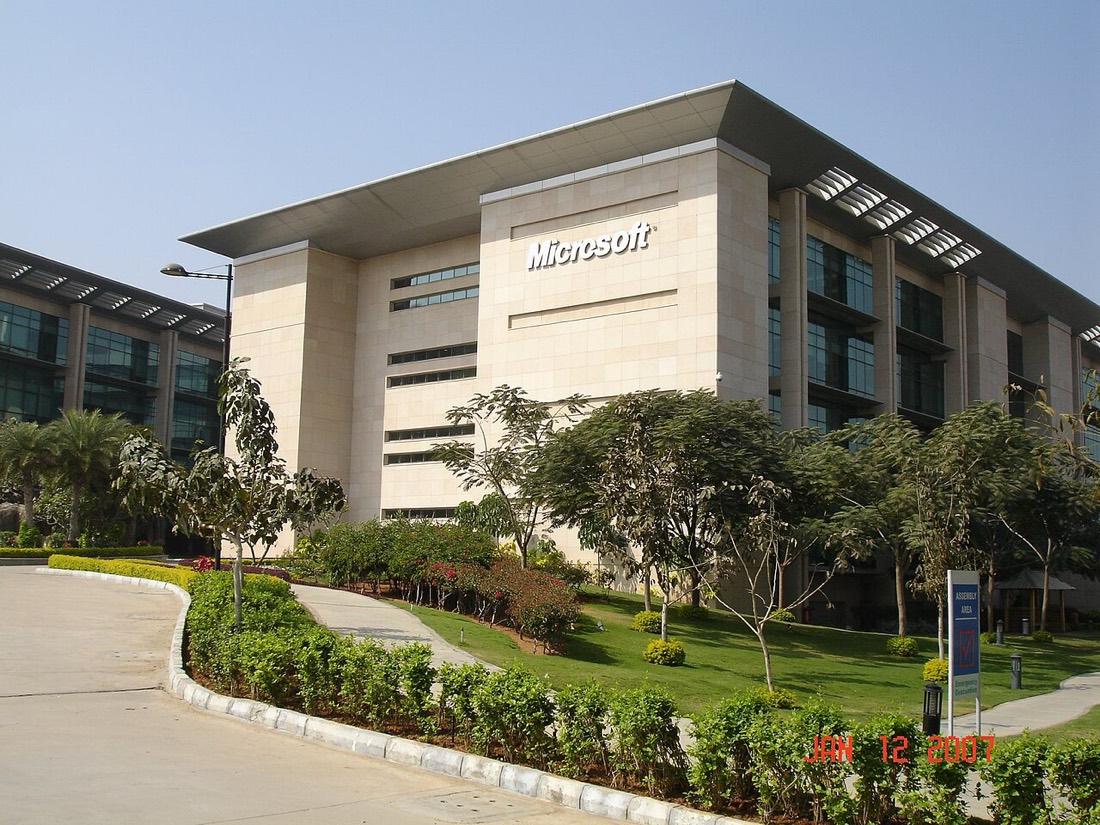
TCS reported that 86% of its Copilot-licensed employees use the tool actively in daily work. In research and content-heavy functions, TCS teams recorded productivity improvements of 20% to 25%. For certain work cycles, completion times fell by 25% to 35%.
Infosys has crossed 100,000 Copilot users with a monthly active usage rate exceeding 91%. The company has integrated AI tools across multiple business functions beyond just coding, including client communication, documentation, and internal workflow management.
Wipro stands out with over 95% monthly active usage among licensed employees, one of the highest enterprise AI usage rates disclosed publicly anywhere in the world.
The same week, Goldman Sachs issued a sector note downgrading TCS, Infosys, and Tech Mahindra while upgrading Wipro. The Goldman note cited high valuations that do not factor in the expected industry revenue slowdown. Industry constant currency revenue growth had already moderated to 3% year-on-year for the March 2026 quarter, per BNP Paribas research.
TCS reported that 86% of its Copilot-licensed employees use the tool actively in daily work.
Why This Matters for Investors
The AI adoption story and the Goldman downgrade are not contradictory. They address different timeframes. The Copilot rollout is a medium to long-term story about productivity, margin improvement, and competitive differentiation. The Goldman downgrade is a near-term valuation and revenue growth story.
In the near term, India's IT sector faces headwinds. US and European clients have been cautious on discretionary tech spending as their own economies work through uncertainty. The 3% constant currency revenue growth in Q4 FY26 is not a crisis number, but it is materially below the 8 to 12% growth rates that justified IT sector valuations in 2021 and 2022.
In the medium term, the AI productivity story matters because it affects margins. If TCS employees doing research work 25% faster, TCS can either deliver the same work with fewer people or take on 25% more projects with the same headcount. The second scenario is how AI productivity translates into revenue growth for an IT services company. Which scenario plays out depends on whether client demand recovers.
Wipro's upgrade from Goldman Sachs, while its peers were downgraded, reflects the valuation discount Wipro has historically traded at relative to TCS and Infosys. With AI adoption rates comparable or better, a lower valuation multiple is less justified, in Goldman's view.
Market Reaction
Nifty IT rallied over 4% on June 2, 2026, driven partly by strong US technology earnings and TCS's Mistral AI partnership announcement. The AI productivity story, combined with US tech giant earnings proving resilient, temporarily overcame the concern about India IT's own revenue growth.
Goldman Sachs's subsequent downgrades of TCS and Infosys, while acknowledging the AI story, served as a reminder that valuation matters even for quality companies. At elevated price-to-earnings multiples, TCS and Infosys need consistent double-digit revenue growth to justify current prices. A 3% constant currency growth environment does not supply that.
Wipro's outperformance post-upgrade was limited, as the sector-wide concern about growth moderation weighed on the entire space.
What Investors Should Watch
Q1 FY27 IT results in July 2026 are the most important near-term data point for the sector. The key metrics to watch are constant currency revenue growth, deal total contract value (TCV) which indicates future revenue visibility, and gross margin trends which will show whether AI productivity gains are flowing to the bottom line.
Watch whether US technology clients are allocating AI infrastructure budgets to Indian IT firms for implementation and management work. The AI spending wave in the US has primarily benefited hardware (Nvidia) and cloud providers (Amazon, Microsoft, Google) so far. India's IT firms are positioning to capture the AI services layer, implementation, integration, and ongoing management, which is where their revenue opportunity lies.
Attrition data is a secondary signal. Lower attrition at Indian IT firms in 2025 and 2026 compared to the 2022 highs reduces cost pressure and improves delivery quality. Watch whether that stability persists through the current demand slowdown.
Risks to Monitor
If AI productivity tools continue improving rapidly, the risk for IT services firms is that clients start demanding the same output for less money. A client who previously needed 100 person-months to build a software system and now needs 75 person-months with AI assistance may simply reduce their contract value by 25%. That is the structural risk that no amount of good execution by India's IT firms fully eliminates.
Visa and immigration policy in the US remains an operational risk. India's IT sector depends on deploying engineers on-site at US clients. Tightening of H-1B visa policies under the current US administration adds friction and cost to the business model.
The Goldman Sachs downgrade reflects a view that current valuations are pricing in a recovery that may not materialise in FY27. If US client spending stays muted through FY27, TCS and Infosys will struggle to grow into their current valuations, creating downside risk to their share prices despite the company-level execution being sound.
The 300,000 Copilot seat announcement is a statement of intent from India's IT giants. They are not waiting to see how AI reshapes their industry. Whether that intent translates into margin improvement, faster deal wins, or new revenue streams will be the defining question for IT sector investors through the rest of 2026 and into 2027.