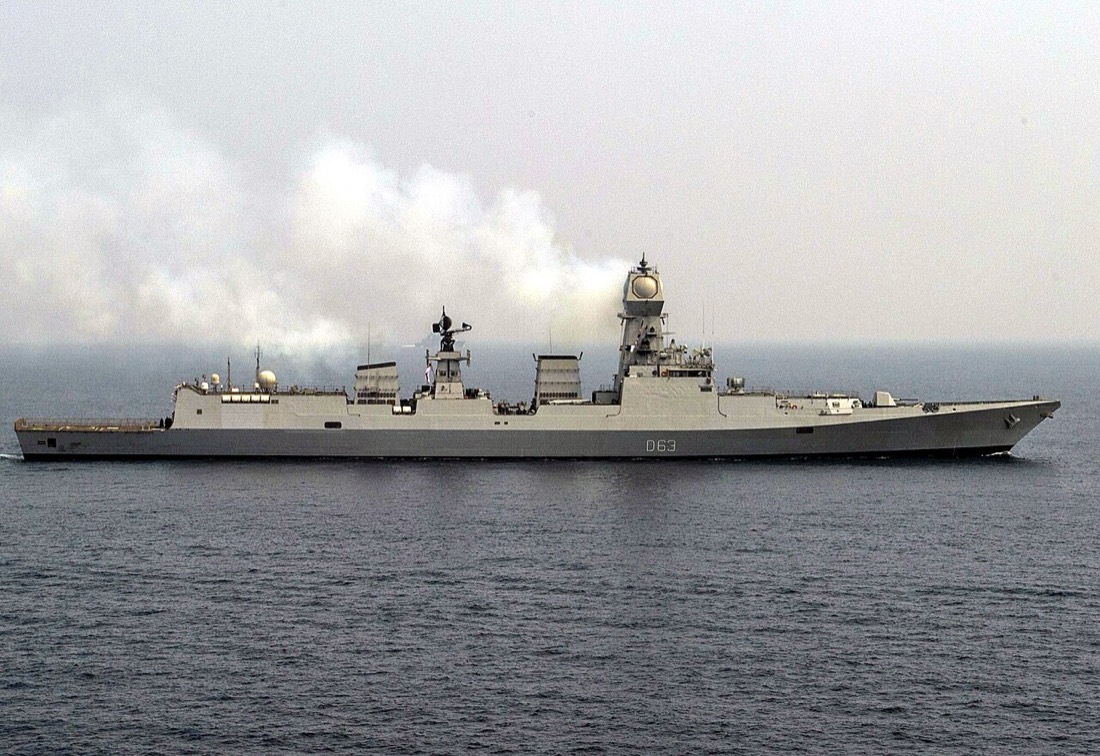
In late March 2026, India did something it had never done at this scale: it sent the Navy to protect its oil supply. Operation Urja Suraksha, launched in response to the Strait of Hormuz crisis, deployed over five Indian Navy warships to escort oil tankers and cargo ships through one of the world's most contested maritime corridors. The name, which translates to Energy Safety, made explicit what Indian foreign policy often leaves implicit: energy is a security issue, not just an economic one.
The operation did not happen in isolation. It was one part of a broader government response to the worst energy supply disruption India had seen in decades. The other parts included rerouting 70% of crude imports outside the Strait entirely, expanding the supplier base to over 40 countries, and resuming oil purchases from Iran under a US waiver for the first time since 2019.
Together, these responses represent India's most active and visible energy security intervention in its post-liberalisation history.
What Happened
The US and Israel launched air strikes against Iran on February 28, 2026. Iran responded by blocking the Strait of Hormuz to commercial shipping, using the Revolutionary Guard Corps to board and attack merchant ships and lay sea mines in the waterway. Shipping companies suspended transits. Insurance costs for the Hormuz route spiked sharply. Oil prices surged.
India's crude oil basket jumped from $69 per barrel in February to $126 per barrel in March and peaked at $157 per barrel as the full supply shock transmitted. India's crude oil imports fell 23% by volume in March as refiners struggled to secure alternative supply quickly enough.
The government's public response began on March 11, when officials confirmed that domestic fuel inventories remained adequate for the near term. By late March, Operation Urja Suraksha was launched with Navy assets deployed to the region. The operation's mandate was to escort Indian-flagged vessels, provide a visible deterrent, and signal that India would not passively absorb a supply disruption.
Simultaneously, the Petroleum Ministry announced that India had successfully rerouted 70% of its crude imports outside the Strait of Hormuz by sourcing from Africa, Latin America, Russia's Arctic routes, and US Gulf Coast. The supplier base expanded from roughly 20 primary sources to over 40.
Why This Matters for Investors
India's visible military presence in a commercial oil corridor is a departure from its traditional posture of staying out of military entanglements in West Asia. For investors, this signals that India's government is prepared to take active steps to protect energy supply, which reduces the tail risk of a complete supply shutdown.
For oil marketing companies, BPCL, HPCL, and IOC, the security of supply at any price is a precondition for operations. A refinery that runs out of crude input shuts down, with cascading consequences for fuel availability, government revenue from excise duties, and OMC cash flows. Operation Urja Suraksha reduces that extreme risk.
The cost of naval deployment is borne by the government, not by OMCs or consumers directly. But the higher freight costs of alternative supply routes, using Cape of Good Hope or other longer paths around Africa rather than the shorter Hormuz route, do raise the effective cost of crude even when global oil prices moderate.
For defence sector stocks, the operation signals renewed government emphasis on naval capability, which could translate into faster procurement approvals for naval vessels, maritime surveillance systems, and allied equipment over the next two to three years.
Market Reaction
Defence and aerospace stocks saw interest after the operation was announced. Companies like Mazagon Dock Shipbuilders, which builds naval vessels, and Bharat Electronics, which supplies naval electronics, gained attention from investors drawing connections between India's naval deployment and future defence procurement.
Energy stocks had a more mixed reaction. The operation reduced supply disruption risk, which is positive for OMCs. But the high crude prices that necessitated the operation continued to weigh on their margins. The relief from knowing supply was secured was offset by the ongoing pain of paying $97 to $126 per barrel instead of $69.
Broadly, the combination of higher defence spending signals and higher energy costs is a challenging environment for the fiscal deficit, which investors and rating agencies monitor closely.
What Investors Should Watch
The duration of Operation Urja Suraksha is a key variable. If the Iran peace talks underway in early June 2026 succeed and the Strait reopens, the naval deployment can wind down and shipping costs normalise. If the talks fail and the disruption continues into Q2 and Q3 FY27, India faces a sustained period of elevated energy costs with no clear endpoint.
Watch India's monthly crude import data for signs that 70% outside-Hormuz routing is holding. If the share of alternative routes stays high, it means India has structurally reduced its Hormuz dependency, which is positive for energy security regardless of the current conflict's outcome.
The bilateral negotiation India is running with Iran for safe passage through the strait is a diplomatic track running parallel to the naval one. A deal for guaranteed Indian shipping access through the Strait, even while the broader US-Iran conflict continues, would reduce India's cost premium on alternative routing and normalise the energy supply picture faster.
Defence budget allocations in the Union Budget for FY27 are worth monitoring. If the government signals increased naval procurement, capital goods and defence manufacturing stocks would benefit.
Risks to Monitor
A naval incident involving Indian warships during Operation Urja Suraksha would escalate India's exposure to the West Asian conflict significantly. While India has positioned the operation as defensive and non-partisan, any direct confrontation with Iranian forces would create geopolitical and market consequences that are difficult to price.
India's bilateral engagement with Iran, including resuming oil purchases and negotiating Hormuz passage independently, creates tension with its alignment with US strategic objectives. If Washington decides to treat these moves as problematic, it could affect India-US bilateral relations, including trade negotiations, technology access, and strategic partnership frameworks.
The energy import bill is already straining India's external finances. A sustained Hormuz closure through FY27 would widen the current account deficit further, deplete foreign exchange reserves, and put additional downward pressure on the rupee at a time when FPI outflows are already creating dollar demand.
India's response to the Hormuz crisis has been one of the most assertive displays of energy security policy in its history. It has worked well enough to prevent an outright supply collapse. Whether it has worked well enough to prevent lasting economic damage depends on how quickly oil prices normalise, and that depends on whether the Iran conflict ends.