India spent part of 2026 quietly buying Iranian crude again, under a narrow legal window that Washington had opened. That window expired on 21 August 2026, and the package replacing it landed on 24 August as Operation Economic Outcast, covering foreign entities that deal with five sectors of Iran's economy including shipping and gold.
Brent settled at $94.39 the day the waiver lapsed and then fell to $92.06 when the sanctions actually arrived. The price is not the story. The story is who is allowed to buy.
Why this is different from a normal oil spike
Because it restricts buyers, not barrels. A supply disruption removes oil from the world; secondary sanctions remove permission, which means the oil still exists but a specific set of refiners, shippers, insurers and banks can no longer touch it without losing access to the US financial system.
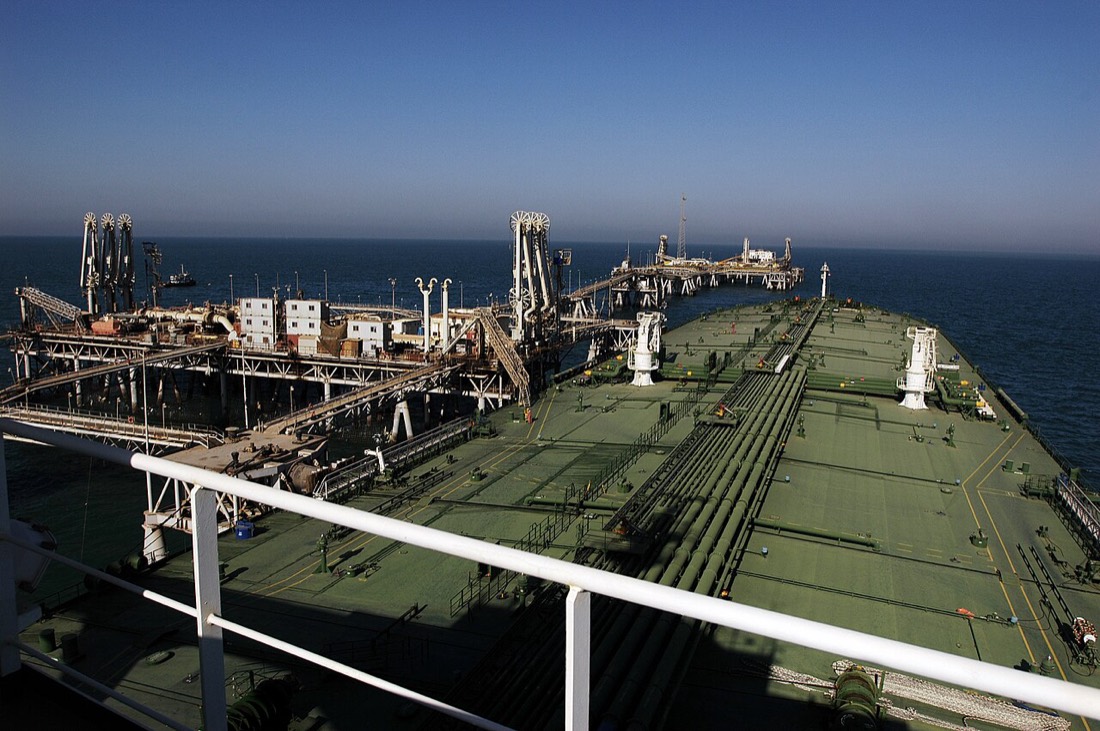
That distinction decides how long the price stays elevated. The July 2026 spike above $85 unwound completely within weeks because no physical barrels actually went missing. A sanctions regime is stickier, since compliance departments move slowly and rarely reverse a decision on a rumour of de-escalation.
India sits in an awkward spot in that structure. It is not the target of these measures, but it is one of the largest buyers in the region the measures are designed to isolate.
How exposed are Indian refiners?
Less than the headlines suggest, and more than they would like. Indian state-owned refiners carry sovereign backing, integrated operations running from refining through retail, and the ability to spread risk across multiple corporate entities, which gives them more room to manoeuvre than private buyers have.
They also saw this coming. Refiners have been slowing Russian import deals and widening their crude basket for months precisely because of the secondary sanctions Washington had been threatening, and that caution is why Iranian volumes never returned to their earlier scale even while the waiver was live. The uncertainty about how long the permission would last did more to limit purchases than any single rule.
Why oil FELL when the sanctions landed
This is the part most coverage got backwards. Brent dropped about 2.5% to $92.06 and WTI 2.5% to $84.89 on 24 August 2026, the day the package was unveiled, after both had gained more than 5% the previous week in anticipation of it.
Three reasons, none of which is that Washington was not serious. The move was already priced, after two weeks of the market paying in advance for an announced "economic D-Day". Sanctions restrict permission, not production, so a barrel that cannot legally reach a European refiner can still be lifted, blended, re-labelled and sold at a discount to a buyer with a higher risk tolerance. And critically, the package stopped short of sanctioning major Chinese financial institutions, which is the measure that would actually strand cargoes.
That last omission is the whole game. China buys more than 80% of Iran's shipped oil, so a campaign that does not change Chinese behaviour changes very little, and Beijing has rejected the American framing throughout. Sanctioning individual teapot refineries is a warning shot; sanctioning the banks that clear their payments would be the weapon.
The sequel proved the point. Sanctions alone left oil lower; renewed US air strikes near the Strait of Hormuz in early September, and then attacks on Saudi Arabia's East-West pipeline, pushed Brent to $108.75 by mid-September, because strikes threaten the barrels themselves rather than the paperwork around them.
What it means for the rest of us
The transmission from a sanctions list to a household budget runs through the currency first. India pays for oil in dollars, so a costlier barrel means more dollars leaving the country, which weakens the rupee, which then makes every other import costlier too, from electronics to edible oil.
Pump prices are the slowest link in the chain and the most visible. Indian retail fuel prices are held steady for long stretches while oil marketing companies absorb swings in their margins, so a Brent move to $94 shows up in company results well before it shows up at the petrol station, if it shows up there at all.
The policy squeeze is the part worth watching this quarter. The Reserve Bank of India held the repo rate at 5.25% in August with a neutral stance and a door open to a later cut, and expensive oil is the single most effective way to close that door, since fuel-led inflation is exactly the kind a central bank cannot look through. Our will the RBI cut rates again in 2026 analysis lays out the balance.
What to watch next
Enforcement, now that the package is public, is the first thing. The measures named Chinese teapot refineries but spared major Chinese financial institutions, and China takes more than 80% of Iran's shipped oil. If enforcement reaches banks rather than refiners, cargoes strand and the calculation changes for every buyer, India included.
The second is whether Iran keeps sending mixed signals. Iran's president indicated during the same week that Tehran wants the war to end soon, and each conciliatory statement has taken a dollar or two out of the price before the next threat restored it.
The third is India's crude basket. How quickly refiners replace Iranian grades, and at what premium, is the number that determines whether this is an accounting problem or an inflation problem. Our earlier India resumes Iranian oil imports piece covers how those barrels came back in the first place.
Risks to monitor
The second risk is diplomatic reversal. This is a negotiation conducted in public, and a deal struck around the UN General Assembly would take the premium out faster than it went in.
The third is that India's exposure is not only about oil. Sanctions aimed at a country's trading partners eventually touch shipping, insurance and payments, and those systems are shared across every import India makes. This is general information, not investment advice.
For most of this year the Iranian question reached India as a headline about somebody else's war. The waiver's expiry changes that. India is not a party to this conflict, has no vote in the sanctions package, and will still pay for it at the pump, in the rupee and in the interest rate it gets next year.