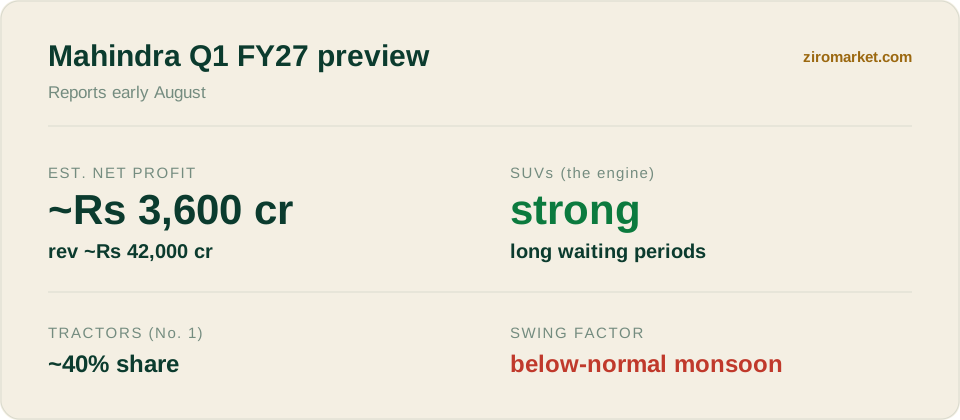
The most interesting auto result of the season may be the one that reads two economies at once. Mahindra & Mahindra reports Q1 FY27 in early August, with its SUV business expected to stay strong and its tractor arm, the country's largest, hinging on a below-normal monsoon. Profit is seen near Rs 3,600 crore, but the story is in the split between a confident urban buyer and an uncertain rural one.
That dual exposure makes M&M unlike its peers. Where Maruti tracks the car market and Tata Motors tracks global luxury, Mahindra tracks the SUV showroom and the farm at the same time.
What To Expect
The SUV engine should carry the quarter. Demand for the Thar, Scorpio-N and XUV700 has stayed strong, with waiting periods running into months, and Mahindra's SUV revenue market share has been rising, which supports both volumes and pricing. A healthy SUV mix is the most reliable part of the expected result.
The tractor arm is the uncertainty. As India's largest tractor maker with about 40% share, Mahindra's farm business is its clearest rural link, and tractor demand depends on farm incomes and the monsoon. With the 2026 monsoon forecast below normal, as our India monsoon 2026 coverage explains, the tractor read is the number the market will scrutinise most.
Margins tie the two together. The mix between higher-margin tractors and the auto business, along with input costs, will shape profitability, so the commentary on both demand and margins matters as much as the headline profit near Rs 3,600 crore.
The auto margin deserves its own attention. Mahindra has defended SUV pricing thanks to long waiting periods, which usually protects profitability, but rising input costs and the ramp-up of lower-margin electric models can pull the blended margin either way. A steady auto margin alongside strong volumes would show the SUV franchise is converting demand into profit rather than just winning market share, the distinction that separates a good quarter from a merely busy one.
The Two Engines
Mahindra is really two businesses reporting as one.
Why This Matters for Investors
Mahindra is the market's rural barometer. Because tractors are bought when farmers feel confident, Mahindra's farm commentary is one of the best available reads on rural demand, which affects everything from two-wheelers to consumer goods. That makes its result matter well beyond the auto sector.
The SUV strength is its own signal. Long waiting periods and rising share show the urban and aspirational buyer remains active, the same premium-led strength seen in Maruti's SUVs and exports, as our auto sector Q1 FY27 scorecard compares. The contrast with soft small cars and, potentially, soft tractors is the sector's central tension.
The EV angle adds a longer-term dimension. Mahindra's BE and XEV electric SUVs put it in direct competition with Tata Motors and newer entrants for a fast-growing slice of the market, and how those models sell will shape its passenger-vehicle story over the next few years, even if they remain a small part of this quarter's numbers. Investors will listen for any update on EV volumes and capacity alongside the core SUV and tractor read.
For the market, Mahindra completes the demand picture. IT and banks showed the corporate and credit side is healthy; autos are showing consumption is strong at the top, and Mahindra's tractors will reveal whether the bottom, rural India, is keeping up.
What Investors Should Watch
The first thing to watch is tractor volumes and rural commentary. With a below-normal monsoon, whether tractor demand holds is the single most important question in the result.
The second is SUV momentum and margins, the reliable engine that should offset any farm softness.
The third is the EV ramp, as Mahindra's BE and XEV electric SUVs compete for share in a fast-growing segment.
Risks to Monitor
The clearest risk is a weak monsoon hitting tractors. A poor farm season would dent Mahindra's rural business and its margins.
A second risk is SUV demand cooling or competition intensifying, which would remove the quarter's expected support.
The third is input costs, which could pressure margins across both the auto and farm businesses. This is general information, not investment advice.
Mahindra's result is the auto season's most revealing, because it puts the confident SUV buyer and the weather-dependent farmer on the same page. If SUVs stay strong and tractors hold up despite the monsoon, it would signal that India's demand is broadening beyond the premium end. If tractors disappoint, it would confirm that rural India is still waiting for its turn.