India's largest stock exchange is finally cleared to sell shares in itself, and its most recent annual report is the least flattering one it has published in years. NSE fixed the price band at Rs 1,700 to Rs 1,785 per share on 11 September 2026 for a Rs 22,562 crore pure offer for sale, with bidding from 17 to 21 September and listing on 24 September, all of it priced off an FY26 in which NSE's profit FELL 15.5% to Rs 10,302.06 crore.
The cause of that drop is the part worth sitting with. NSE's profit fell because the regulator reviewing its IPO deliberately slowed the trading activity that generates most of its fees, not because it lost customers to a competitor.
Where the issue stands
Priced, bid and closed. Anchor bidding on 16 September 2026 raised Rs 6,746.18 crore from 189 investors, all at the Rs 1,785 top of the band, including 98 mutual fund schemes, 27 life insurers, LIC, the SBI group and sovereign funds such as GIC, the Abu Dhabi Investment Authority, Norges Bank and the Monetary Authority of Singapore. How to read that book is in our anchor investors explainer. SEBI issued its observation letter on 4 September 2026, the price band was fixed at Rs 1,700 to Rs 1,785 per share on 11 September, the public issue runs from 17 to 21 September, allotment is expected on 22 September and listing on 24 September. The minimum lot is 8 shares, or Rs 14,280 at the upper band.
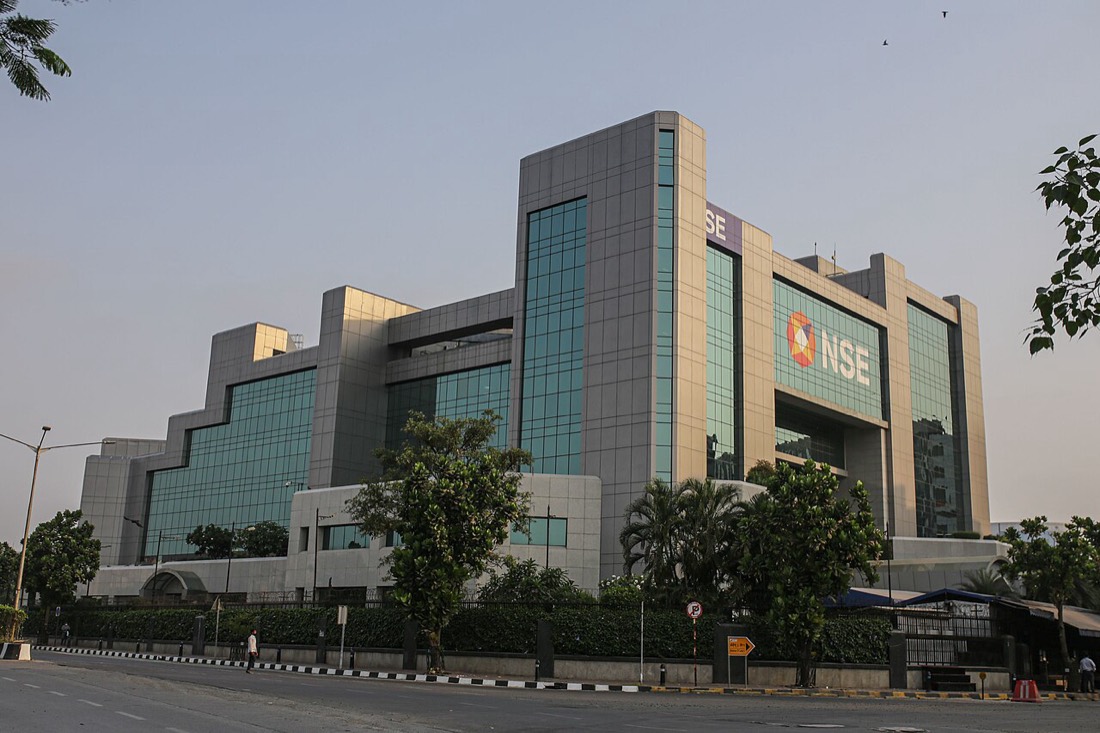
The structure matters as much as the price. This is a 100% offer for sale of about 12.64 crore shares worth roughly Rs 22,562 crore, so not one rupee reaches NSE's balance sheet, with State Bank of India the largest seller alongside the Canada Pension Plan Investment Board, Aranda Investments and several insurers. Life Insurance Corporation of India is keeping its 10.72% holding.
How the bidding has gone
The public issue opened on 17 September 2026 and started slowly, which is normal for a large offer rather than a verdict on it. Day one closed at roughly 0.42 times overall, with qualified institutional buyers at about 0.19 times. By the close of day two on 18 September the issue was about 1.16 times covered, with QIBs at roughly 1.53 times, non-institutional investors at 1.68 times and retail the laggard at 0.72 times.
Institutional bids in Indian IPOs typically cluster on the final day, so the jump in the QIB portion from 0.19 times to 1.53 times inside 24 hours is the normal shape of a large book rather than a surprise. Bidding closes on 21 September, allotment is expected on 22 September and listing on the BSE on 24 September. The final day did what final days do: the issue closed on 21 September 2026 at 5.7 times subscribed, with qualified institutional buyers at 12.7 times, non-institutional investors at 6.5 times and retail at about 1.3 times. Retail was the only category that stayed modest, which leaves small applicants with good odds of an allotment.
The grey market has gone the other way from the subscription book. The premium fell to about Rs 48 per share on the final day, under 3% over the Rs 1,785 upper band, down from about Rs 160 when bidding opened and Rs 227 on 11 September. That is a decline of almost 80% in the indicated listing gain across ten days, even as the issue went from 0.42 times to 5.7 times covered. Grey market quotes are unofficial, thinly traded and often wrong, as our GMP explainer sets out, so the direction of the move is more informative than the level.
How did listing day go?
The grey market had already called it. NSE opened at Rs 1,800 on the BSE on 24 September 2026, a premium of just 0.84% over the Rs 1,785 issue price, well short of the roughly 4% the grey market premium had implied a few days earlier. The stock touched an intraday high of Rs 1,869, up 3.83% from the listing price, before settling at Rs 1,817, a close about 1.8% above the issue price, valuing NSE at roughly Rs 4.59 lakh crore.
The debut landed on a rough day for the wider market: the Sensex fell 1.68% and the Nifty 1.64% on 24 September as crude oil and US bond yields jumped, covered in our Indian stock market today wrap, which makes NSE's small gain look better in context than it does in isolation.
Why did NSE's profit fall 15%?
Because its best business got regulated. NSE earns the bulk of its income from transaction and clearing fees, and SEBI's derivatives tightening pushed futures and options volumes down, dragging FY26 revenue from operations 3.1% lower to Rs 16,601.31 crore and profit 15.5% lower to Rs 10,302.06 crore.
The curbs were aimed at retail traders, not at NSE, after SEBI found that most individual F&O traders lose money, a finding our open interest and put-call ratio explainer works through. Raising index contract sizes to roughly Rs 15 lakh and adding 2% margin on expiry-day short options removed marginal trades, and NSE's revenue line is where those trades used to live.
Why this matters for investors
Because the number that makes NSE attractive and the number that makes it risky are the same number. NSE turned Rs 18,713.37 crore of total income into Rs 10,302.06 crore of profit in FY26, a net margin around 55% with zero debt, the economics of a natural monopoly on market infrastructure. Every trade, listing and Nifty-linked product pays it a toll.
The catch is that the toll road earns half its money from one lane, and the regulator controls that lane. At the upper band of Rs 1,785, against FY26 earnings per share of about Rs 41.62, a buyer is paying roughly 43 times earnings for a year in which those earnings shrank 15.5%.
The bull case is that the derivatives cooling is a one-off reset and the structural story continues, with India's demat base still expanding, as our 231 million demat accounts piece tracks. The bear case is that F&O was the growth engine, and SEBI has said plainly it wants that engine running slower.
What has the market already priced in?
NSE unlisted shares changed hands around Rs 1,920 to Rs 1,925 in August 2026, and the IPO band was then fixed below that at Rs 1,700 to Rs 1,785, which is sellers leaving room on the table rather than extracting the maximum.
Risks to monitor
Exchange economics are set by rules NSE does not write, and the F&O tightening proved a single SEBI circular can move a fifth of the profit line.
The pure OFS structure means investors are funding an exit, not an expansion, and LIC's retained 10.72% alone is far larger than the entire float being sold now.
Timing is the last one. The issue closed into a market that had fallen for six straight weeks, with retail the least subscribed category at about 1.3 times. This is general information, not investment advice.
Nobody should be surprised that the exchange is worth a fortune. What the DRHP actually reveals is subtler: India's market infrastructure is so profitable that the regulator had to slow it down on purpose, and the resulting 15% profit decline is being presented to public investors as the base year.