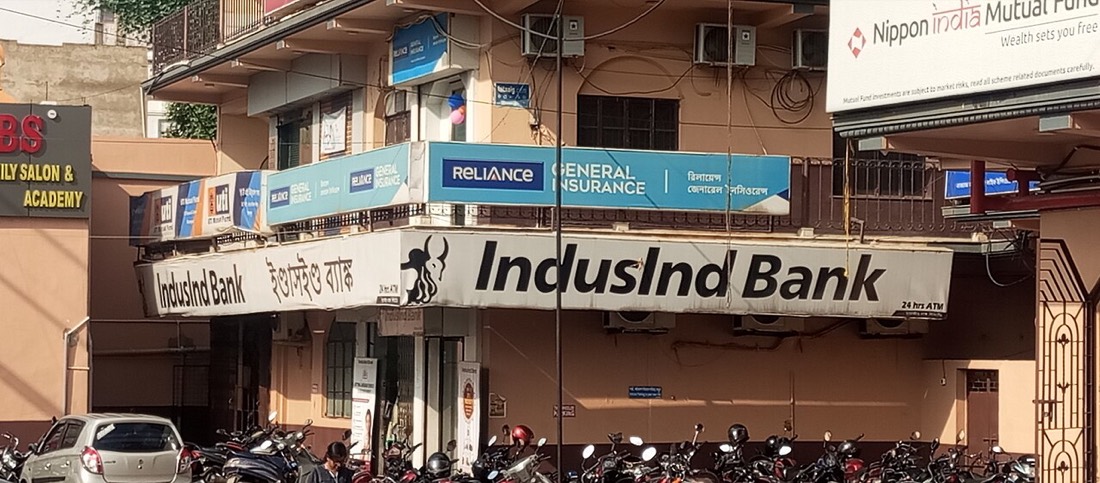
IndusInd Bank's stock fell 25 percent in a single session in March 2025, after the bank disclosed a roughly Rs 2,100 crore accounting discrepancy sitting in its derivatives book for years. Most promoters facing that headline would go quiet and wait it out. The Hinduja Group instead said publicly it would infuse more capital into the bank if needed and raise its stake toward the 26 percent ceiling the RBI had cleared in 2023, yet the promoter group's filed holding was still about 15.08 percent in 2026. That gap between a promise and a purchase is the whole lesson of promoter holding data: the people who know a company best can signal confidence in words for free, but only the shareholding filing shows whether they put money on the line.
What actually counts as "promoter holding"
Every listed Indian company has to break its shareholding into categories each quarter under SEBI's disclosure norms, and "promoter and promoter group" is one of them. It covers the founders, their families, and any entity they control, separate from public shareholders like mutual funds, FIIs, and retail investors. A company needs at least 25 percent of its shares in public hands, which effectively caps promoter holding below 75 percent for most listed firms. You can pull this shareholding pattern straight from an exchange filing or any decent stock screener, and the trend across several quarters tells you far more than a single reading ever will.
When is a rising stake the real thing?
The IndusInd Bank episode is a useful test case because the stakes were so visible.
When a falling stake means the opposite of what it looks like
Vodafone Idea shows the other side of this coin. In 2025, the government converted close to Rs 36,950 crore of the company's unpaid spectrum and AGR dues into new equity shares.
That single move pushed the government's stake in Vodafone Idea to nearly 49 percent (as of April 2025), up from about 22.6 percent, mechanically diluting every other shareholder, promoters included. Neither Vodafone Plc nor the Aditya Birla Group sold a single share to get there. A promoter stake can fall purely because a company issued a large number of new shares to someone else, and that dilution looks identical on a spreadsheet to a promoter quietly walking away. The only way to tell the two apart is checking whether the total share count jumped at the same time.
Buybacks do the same trick in reverse
This is exactly why the promoter holding number needs reading next to the reason it moved, not on its own. Watch the same shareholding pattern filing for the pledge percentage too, since a rising stake next to a rising pledge is a far weaker signal than one where the pledge is falling or already at zero, an angle covered in more depth in why promoter pledging is a red flag. When a promoter genuinely buys in the open market, it often shows up the same day as a bulk or block deal, usually the fastest way to catch the move before the next quarterly filing confirms it.
None of this means promoter holding data is not worth watching. It means reading it the way you would read any single data point, alongside the reason behind the move, not instead of it. A stake built with real cash during a crisis tells you something meaningfully different from a public promise that never reaches the filing, or from a number that moved because of a corporate action nobody outside the filing even noticed.