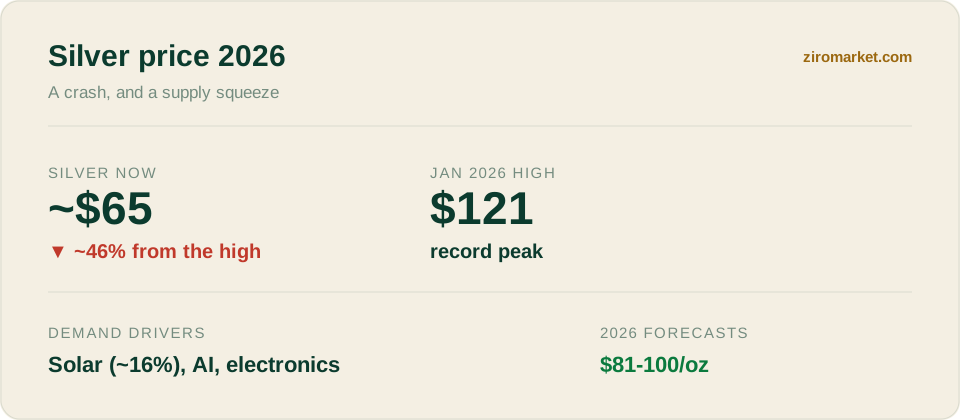
Silver has lived up to its reputation as the wild child of precious metals. After surging past $100 and hitting a record near $121 an ounce in January 2026, silver has crashed back to about $58, a roughly 50% fall, yet a multi-year supply deficit and booming solar and AI demand keep the long-term bull case very much alive. It is a tale of two silvers: a brutal short-term correction layered on top of a structurally tight market.
For investors, the question is whether to focus on the crash or the squeeze. The answer shapes whether silver looks like a falling knife or a discounted opportunity.
The Crash
Silver's fall is dramatic but in character. The metal moves two to three times as hard as gold in both directions, so the same forces that pulled gold off its record hit silver far harder. A stronger US dollar, a hawkish Federal Reserve, the easing of the Iran war that drained the safe-haven premium, and heavy profit-taking after the speculative surge combined to send silver from about $121 to around $58.
The speed of the move is a reminder of silver's volatility. A roughly 50% drawdown in months is the kind of swing that rewards conviction and punishes leverage, and it is exactly why silver is considered a higher-risk holding than gold. You can see how the two metals compare in our gold vs silver in 2026 guide, and track the steadier metal on our gold price today page.
The Squeeze
Underneath the price crash sits a tight physical market. Silver has been in a global supply deficit for several consecutive years, with the Silver Institute forecasting a shortfall of about 67 million ounces in 2026. A large share of silver is a by-product of copper, zinc, and lead mining, so supply responds to those metals' economics rather than to silver demand, leaving it slow to ramp up.
Demand, meanwhile, keeps climbing. Solar panel manufacturing alone accounts for roughly 16% of annual silver demand, and the explosive growth of AI data centres is adding a new industrial buyer on top of the green-energy boom. Much of this industrial silver is used up permanently, not recycled, which is the heart of the structural bull case.
What Analysts Expect
Despite the crash, the forecasts remain bullish, sitting well above the current ~$58 level.
The bull case rests on the supply deficit, solar and AI demand, and potential Fed rate cuts, while the bear case warns that a sustained hawkish Fed and strong dollar could keep silver pinned down near term.
Why This Matters for Investors
Silver offers something gold cannot: leverage to the industrial economy. As solar installations and AI build-outs accelerate, silver demand has a structural tailwind that pure safe-haven gold lacks. That is the appeal, and at $58 after a roughly 50% crash, bulls argue the risk-reward has improved.
The catch is volatility and a hidden demand risk. Silver's swings are punishing, and there is a self-correcting danger called thrifting: when silver gets expensive, solar manufacturers redesign panels to use less of it, or switch to silver-free methods, capping demand. So the same high prices that excite investors can quietly erode the industrial demand underpinning them.
For Indian investors, silver is accessible through silver ETFs on the NSE and BSE, as well as physical and digital silver. Given the volatility, it suits a smaller, higher-risk slice of a portfolio rather than the core, and pairs naturally with a steadier gold holding, as covered in our how to invest in gold in India guide.
Risks To Monitor
The clearest near-term risk is the Fed and the dollar. A confirmed rate hike and a stronger dollar would pressure all precious metals, and silver most of all given its volatility.
A second risk is thrifting and substitution in solar, which could soften the industrial demand that anchors the bull case if prices rebound too far, too fast.
The third is silver's own volatility. A roughly 50% crash shows how fast sentiment can turn, so position sizing matters more for silver than for almost any other mainstream asset. This is general information, not investment advice.
Silver in 2026 captures the tension between a violent market and a tight one. The crash to $58 is real, but so is the 67-million-ounce supply deficit and the solar-and-AI demand story. Which force wins over the rest of the year is the question every precious-metals investor is weighing.