Gold has just had its worst month in almost two decades. Spot gold fell about 12.4% in June 2026, its steepest monthly decline since October 2008, as a US-Iran ceasefire drained the fear premium, a hawkish Federal Reserve signalled rate hikes, and a strong dollar sapped demand. It was gold's fourth straight monthly fall, a dramatic reversal for a metal that set records at the start of the year.
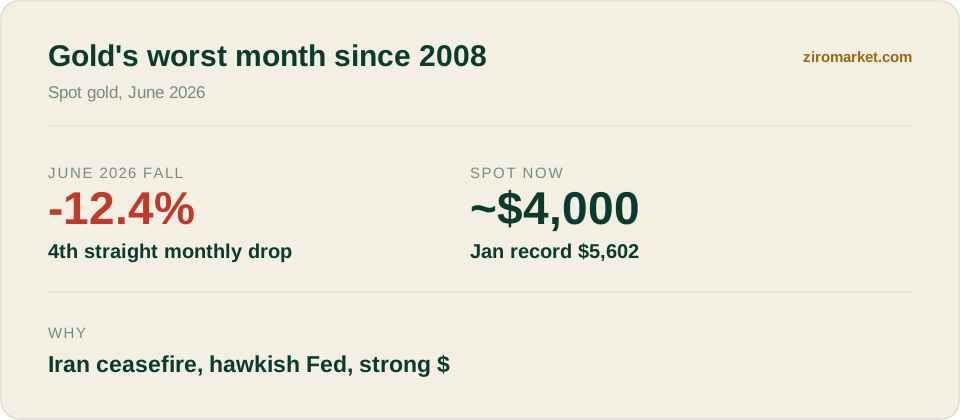
The scale of the drop is striking given how strong gold looked just months ago. After peaking near $5,602 in January on Middle East conflict, the metal is now trading close to $4,000, undone by the very thing that drove it up: geopolitics, now working in reverse.
What Happened
The reversal was sharp and swift. Gold lost about 12.4% over June, ending the month near $3,985 an ounce, its worst monthly performance since the depths of the 2008 financial crisis. It marked a fourth straight monthly decline and pulled gold far from its January record of around $5,602.
The drivers were a mirror image of what powered the rally. Here is what changed.
When the world calms down, the fear trade unwinds, and gold is the purest fear trade there is. The easing of Middle East tensions removed the geopolitical premium, while the Fed's hawkish turn and a strong dollar added pressure on a metal that pays no yield.

Why This Matters for Investors
Gold's crash is a lesson in how fast sentiment can turn. The same geopolitics that drove gold to records in January drove it to its worst month since 2008 in June, showing that safe-haven demand can reverse as quickly as it builds. Investors who chased the record highs have seen a rapid drawdown.
It also underlines gold's core trade-off: safety without yield. When interest rates and the dollar rise, the opportunity cost of holding gold climbs, and money rotates into bonds and cash. That is exactly the dynamic that hit gold in June, and it is why the Fed's stance matters so much for the metal.
For Indian investors, the fall has made gold cheaper than a few weeks ago, with the 24-karat rate easing to about Rs 1,40,770 per 10 grams. Whether that is a buying opportunity or the start of a deeper slide depends on the same forces, the Fed, the dollar, and geopolitics, that drove the crash. You can track live levels on our gold price today and gold rate today in India pages.
Market Reaction
The gold slide has rippled across precious metals, with silver falling even harder given its higher volatility. In India, the drop has shown up as easing jewellery and coin prices, a relief for buyers after months of record rates.
For equities, cheaper gold is a symptom of the same risk-on mood that has, on some days, lifted stocks, as money rotates out of safe havens and back toward risk assets. The two moves are connected pieces of the post-ceasefire shift in sentiment.
What Investors Should Watch
The first thing to watch is the Fed. Because much of the June fall was about rate-hike expectations, any softening in the Fed's hawkish stance could spark a quick gold rebound, since the drop was driven more by sentiment than by physical demand.
The second is the dollar. Gold is priced in dollars, so the currency's direction is a powerful near-term driver, and a peak in the dollar would remove a major headwind.
The third is central bank buying. Official-sector demand has underpinned gold for years, so whether central banks keep buying through the dip is the key structural signal for the long-term outlook.
Risks to Monitor
The clearest risk is that the hawkish Fed and strong dollar persist, keeping gold under pressure and extending the run of monthly declines.
A second risk is that calm holds in the Middle East, since a lasting peace keeps the fear premium drained. The flip side is that any fresh geopolitical shock could send gold racing back up, as it has repeatedly shown it can.
The third, for Indian buyers, is the rupee. A weaker rupee can cushion the fall in local gold prices even when the dollar price drops, so the currency and the metal need to be watched together. This is general information, not investment advice.
Gold's worst month since 2008 is a reminder that even the ultimate safe haven is not safe from a change in mood. After a record-breaking start to 2026, the metal has spent the second quarter giving much of it back, and whether June was a healthy correction or the start of something deeper is the question every gold investor now faces.