China just posted the kind of trade number that changes other countries' industrial policy. China exported about $401.44 billion of goods in August 2026, a 25% jump from a year earlier, and ran a monthly trade surplus of $119.09 billion, up from $112.5 billion in July, on demand for automobiles and the high-technology components feeding the global build-out of artificial intelligence infrastructure.
Imports grew too, by 28.2% to roughly $282.36 billion, though that came in below the 30% economists had expected. The gap between what China sells and what it buys is widening, not closing, which is the number that governments from Washington to New Delhi actually respond to.
For India the question is not whether this is impressive. It is where roughly $119 billion of monthly surplus production goes looking for buyers.
What the August data showed
Autos and high-technology goods did the heavy lifting. Export demand for high-technology components has been lifted by the worldwide construction of AI data centres, which has cushioned China against weak domestic demand and a slump in property investment. The domestic economy is still soft. The external one is doing the work.
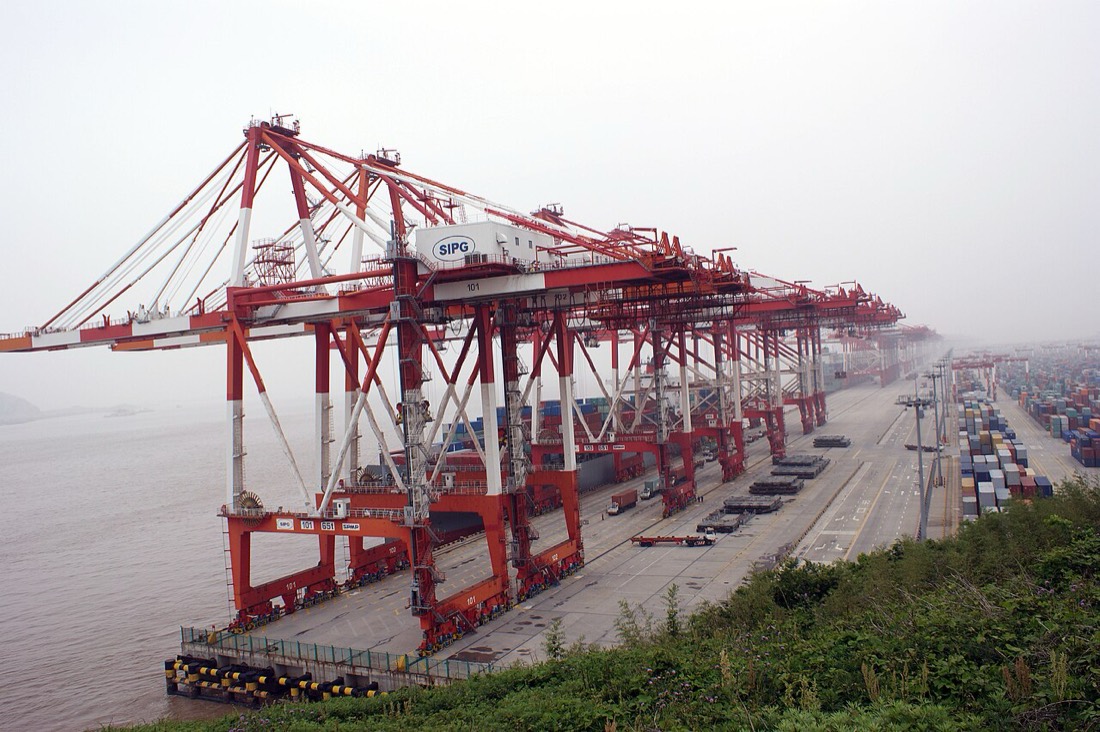
The United States number is the one that will draw political attention. China's exports to the United States reached $42.5 billion in August 2026, up 34.4% year on year, against $13.3 billion of American exports the other way, a bilateral surplus of about $29.2 billion in a single month. Several years of tariff policy have rerouted trade without shrinking the imbalance.
Why a 25% export surge lands on India
Surplus production does not stay home. When a manufacturing economy of China's size grows exports faster than its own consumption, the excess goes to whichever market has the least resistance, and India has historically been one of those markets.
The starting position is already lopsided.
India's trade deficit with China reached a record $112.6 billion in FY26, the largest imbalance India runs with any trading partner. The export side is growing quickly in percentage terms, up 37.2% to $12.31 billion in the first half of FY27, but from a base so small that the ratio still sits near nine to one.
India buys close to nine dollars of Chinese goods for every dollar it sells back.
Market reaction
Indian equities were not trading this data on its own merits. The Nifty 50 traded near 23,200 on 17 September 2026, pressured by Brent crude near $105.80 and renewed foreign selling rather than by China's customs release, which lands as a slow structural factor rather than a session-moving headline.
The transmission shows up in sector margins over quarters, not in a day's index move. Steel and chemicals producers feel import pricing first, capital goods next, and the effect appears in realisations rather than in a single announcement.
What investors should watch
The first is whether India extends its trade remedies. A temporary safeguard duty of 12% for 200 days has been proposed on certain steel products, alongside existing anti-dumping duties on categories such as plastic processing machinery. Product-specific, time-bound measures are the tool India actually uses, so the list of covered products is the real policy signal.
The second is the composition of Indian imports from China. Capital goods, electronics components and solar equipment coming in cheaply lowers the cost of India's own manufacturing build-out, while finished consumer goods displace it. The headline deficit number tells you nothing about which of the two is growing, and the split matters more than the total.
The third is China's domestic demand, because that is what decides how hard exports are pushed. A recovery in Chinese consumption would absorb output at home, and the direction of that is set by the policy priorities in the 15th Five Year Plan and the growth mix our China Q1 2026 GDP piece covered.
The fourth is US trade policy, since barriers there redirect Chinese goods rather than stopping them. Every tonne that cannot enter the United States looks for another destination, and India's tariff walls are lower than America's, a dynamic our global trade and tariffs analysis sets out.
Risks to monitor
The second risk is currency. A weaker rupee raises the cost of every import including Chinese ones, so the deficit measured in dollars and the pain felt in rupees move differently, and 2026 has been a year of rupee weakness.
The third is concentration in critical inputs. India's dependence on China for active pharmaceutical ingredients, electronic components and rare earth processing is a supply security problem that duties cannot fix, because a tariff on something you have no alternative source for is simply a higher price. This is general information, not investment advice.
The striking thing about August is not the 25%. It is that China posted it while its own property market and domestic demand were weak, which means the export machine is being asked to carry the economy, and machines under that much load do not slow down politely.