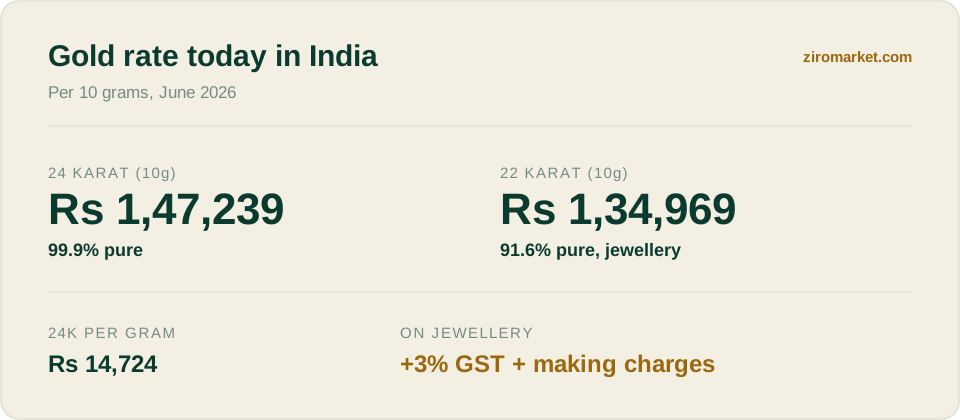
Gold in India is sold by the gram, and the rate moves every trading day with global prices and the rupee. As of July 15, 2026, the gold rate in India is about Rs 1,41,850 per 10 grams for 24 karat gold and around Rs 1,29,900 per 10 grams for 22 karat, near a monthly low as global gold holds just above $4,000 an ounce. A firm dollar has capped the metal even as the US-Iran war continues.
For buyers, the headline rate is only part of the cost. GST and making charges sit on top, so the final bill for jewellery is always higher than the quoted gold price.
Gold Rate by Carat
The rate you pay depends on purity. Here is how the three common carats compare on July 15, 2026.
The 22K rate sits about 8 to 9% below 24K, while 18K, used in lighter and studded jewellery, is roughly a quarter cheaper than pure gold per gram.
Why the Rate Moves
The Indian gold rate is set by three big forces. The international gold price, quoted in dollars per ounce, is the biggest driver, and it is holding just above $4,000 as a firm dollar and high rates offset the safe-haven bid from the US-Iran war. When the global price moves, Indian rates follow within a day.
The second force is the rupee. Since India imports most of its gold, a weaker rupee makes gold more expensive in rupee terms even if the dollar price is flat. With the rupee at a record low near 96.2, currency weakness has cushioned the fall in Indian gold, which is why the local rate held up better than the dollar price.
The third is duties and local demand. Import duty sits in the price, and demand spikes during the festival and wedding seasons can nudge rates and premiums higher. Together these explain why the rate you see changes daily.
What It Means for Buyers
For jewellery buyers, the key is to look past the headline rate. A 3% GST and making charges of anywhere from 8% to 25% mean your final cost is well above the quoted gold price, so comparing making charges between jewellers matters as much as the gold rate itself. Coins and bars carry lower making charges than intricate designs.
For investors who want gold purely as an asset rather than as jewellery, paying making charges on physical gold is inefficient. With Sovereign Gold Bond issuance ended, Gold ETFs are now the default paper-gold route, tracking the price without the markup, as our guide on how to invest in gold in India explains. You can track the global driver on our gold price today page, and for the white metal see our silver rate today in India page.
What To Watch
The first thing to watch is the international gold price, since it sets the direction for Indian rates. A safe-haven rally on any Hormuz escalation, or a break below $4,000 if the dollar firms, will show up in your local rate within a day.
The second is the rupee. A sharp move in the rupee can swing Indian gold rates independently of global prices, so currency news matters for gold buyers too, especially with the rupee at a record low.
The third is the season. Wedding and festival demand can lift premiums and making charges, so timing a large purchase outside peak demand can save money.
Gold remains a cornerstone of Indian savings, and at about Rs 1.42 lakh per 10 grams it is near a monthly low but still historically high. Whether you are buying to wear or to invest, knowing the live rate, the carat, and the charges on top is the difference between a good deal and an expensive one.