The textbook says war lifts gold. The first week of September 2026 said otherwise. Renewed US strikes on Iranian targets near the Strait of Hormuz sent crude sharply higher toward $97 a barrel, and gold fell to about $4,383 an ounce (as of 18 September 2026), a four-week low, down roughly 7% from $4,670 on 24 August.
This is not a broken market. It is two chains of causation pulling in opposite directions, and the stronger one won.
The two chains, and why one wins
Every geopolitical shock reaches gold along two routes at once.
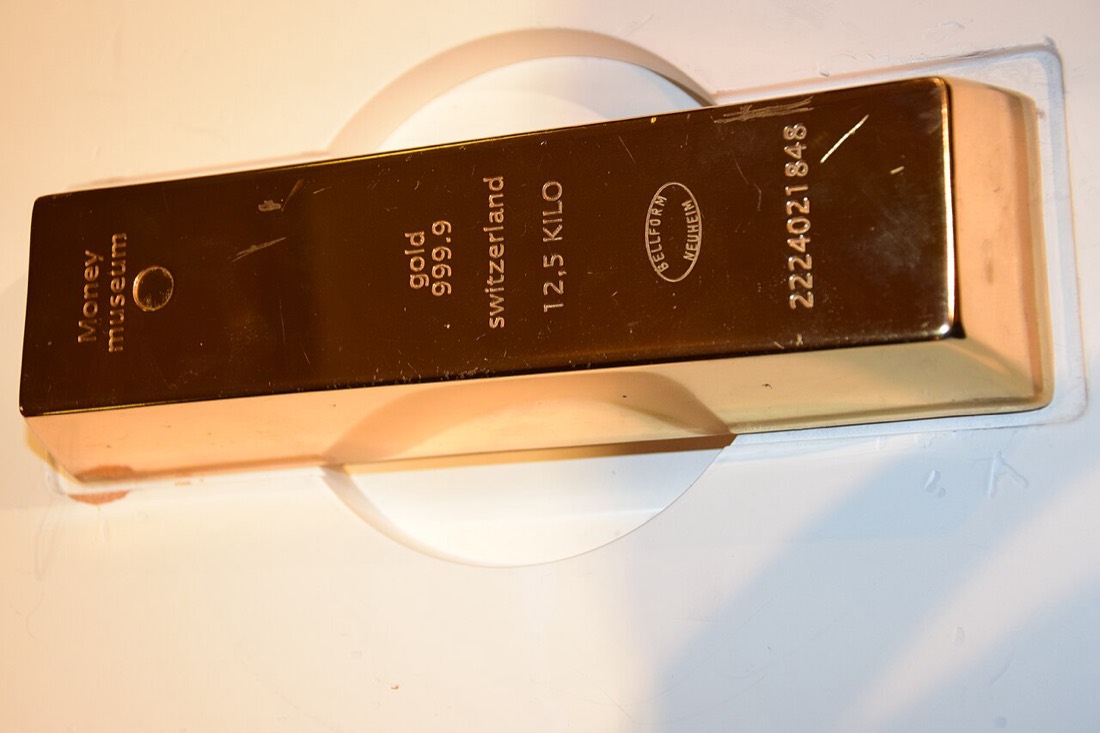
The safe-haven chain is the famous one. Conflict raises uncertainty, investors want an asset with no counterparty and no government behind it, and gold rises. This chain is real, and it is what carried gold through most of 2025.
The rates chain is the quieter and, right now, stronger one. A war that threatens oil supply raises expected inflation. Higher expected inflation, in a world where the central bank has already signalled it will not tolerate a drift above target, means tighter policy for longer. Tighter policy means higher real yields and a stronger dollar. Gold pays no coupon, so when the risk-free real return rises, the opportunity cost of holding a metal that yields nothing rises with it, and the price falls.
In the first days of September, the second chain simply had more force. The market moved from pricing roughly a 35% chance of a September rate hike before Fed chair Kevin Warsh's Jackson Hole speech to about 66% after it and after the strikes, and the Federal Reserve went on to deliver that hike on 16 September, taking rates to 3.75-4.00%. The US 10-year Treasury yield kept climbing after the decision, reaching 5.106% on 24 September, its highest since 2007.
Why Warsh mattered more than the missiles
Because he changed the reaction function. Fed chair Kevin Warsh used his first Jackson Hole keynote on 28 August 2026 to sharpen his warning on inflation and pledge a return to the 2% target, which told markets that an energy shock would be met with tighter policy rather than tolerance.
That single shift rewrote how every subsequent headline gets priced. Before Warsh, an oil spike was a reason to buy gold as an inflation hedge; after Warsh, an oil spike is a reason to expect a rate hike, which is a reason to sell gold. Same event, opposite trade, because the central bank's likely response changed in between. Our Jackson Hole 2026 coverage tracks what he actually said.
The awkward consequence is that the Fed now looks at odds with the US Treasury, which spent August expanding its long-dated bond buybacks specifically to hold yields down.
What it means for Indian buyers
Indian gold has fallen, but less than the dollar chart suggests, and that gap is the rupee. In India 24 carat gold was about Rs 1,52,840 per 10 grams and 22 carat about Rs 1,40,100 (as of 25 September 2026), against Rs 1,63,970 on 25 August, a bigger decline in rupees than the early-September reading, though still less than the equivalent dollar fall.
Two forces cushion the local price. Import duty and GST are levied on the landed value, and a weaker rupee raises the rupee cost of the same ounce, which is why Indian buyers rarely capture the full extent of a dollar-gold fall. The rupee has actually held up better than expected through this episode, supported by Reserve Bank of India dollar sales and strong FCNR(B) inflows.
For anyone buying for a wedding rather than a portfolio, the practical read is simpler. A 5% fall arriving just as the festive and wedding season begins is the first genuine discount of the year, worked through in our buying gold this festive season piece, with the daily level on our gold rate today in India page.
What would turn gold back up
A Federal Reserve that signals it is done hiking would do it. The Fed has already delivered the September hike, so gold's next move depends less on that decision and more on the tone of its following meeting and the bond market's read of it, which is what pushed yields to 5.106% even after the hike itself was priced.
An actual supply disruption, rather than a threat, would also do it, because a closure of the Strait of Hormuz would push oil far enough to make the growth shock dominate the inflation shock, a scenario our what happens if the Strait of Hormuz closes explainer sets out.
Central bank buying remains the slow, structural bid underneath all of this. Purchases reached 288.9 tonnes in the second quarter of 2026, up 62% year on year, and that demand is policy-driven rather than price-driven, which is why our gold price forecast analysis treats it as the floor rather than the trigger.
Risks to monitor
The second risk is the mirror image. If the economy weakens sharply after the September hike, the rate path can reverse, real yields fall, and the same gold that de-rated through September can re-rate quickly.
The third is that oil does the deciding. Gold's next few weeks are more a function of Brent than of any gold-specific factor, which is an uncomfortable position for an asset people buy precisely to avoid depending on other people's decisions. This is general information, not investment advice.
The useful takeaway is not that gold failed. It is that gold hedges currency debasement and financial stress, not geopolitical drama in general, and this month the market was pricing a central bank's response rather than the event itself.