India's largest commercial vehicle maker is buying one of Europe's, and the offer is now live. Tata Motors has opened a tender offer for Iveco Group at 14.10 euros per share, valuing the Italian truck and bus maker at about 3.82 billion euros, or roughly 4.4 billion dollars, with the offer running from 7 September to 26 October 2026.
If it completes, it creates a commercial vehicle group with roughly 22 billion euros of revenue and two home markets rather than one.
What is actually being bought
Less than the Iveco name suggests, and that is deliberate. Iveco transferred its IDV and ASTRA defence businesses to Leonardo in a 1.7 billion euro sale completed in March 2026, which took defence entirely out of the perimeter before Tata Motors' offer.
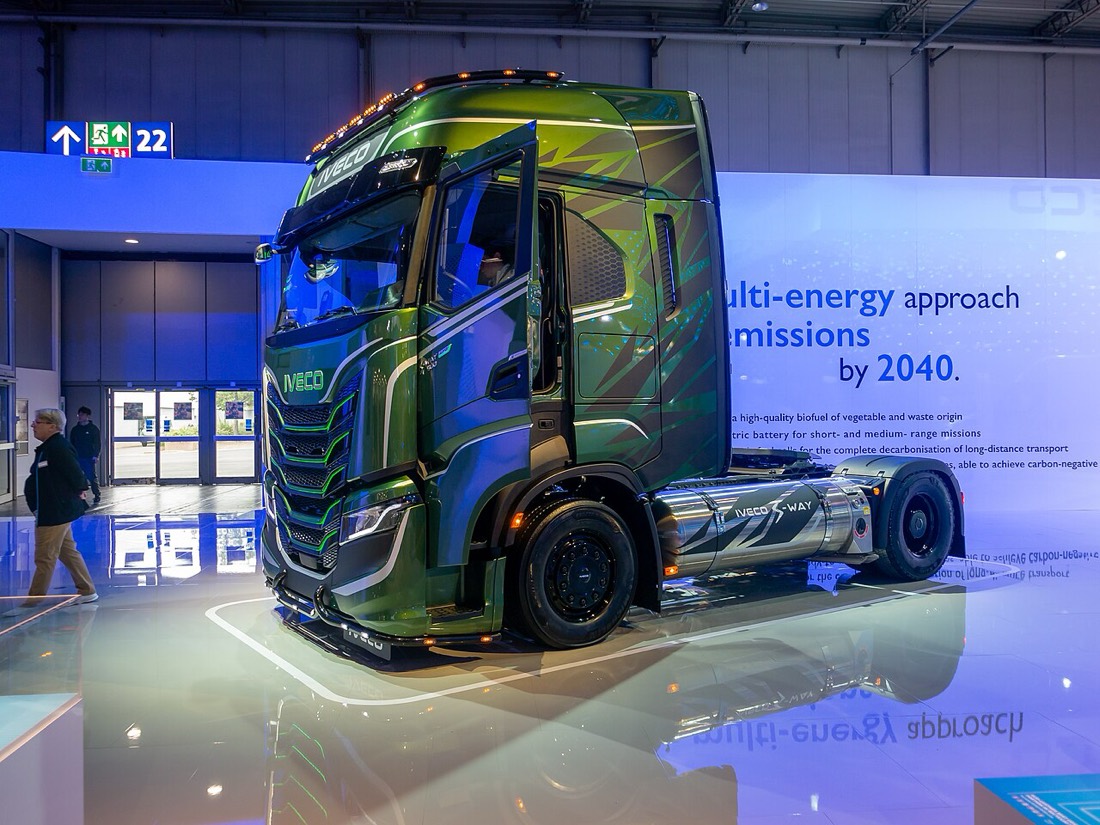
What remains is the commercial vehicle business: trucks, buses and light commercial vehicles, along with the plants, engineering and dealer relationships that go with them. That separation is the reason the deal was structurally possible at all, since defence assets attract a different set of national-security reviews that would have complicated a foreign acquisition considerably.
Why buy rather than build
Because commercial vehicles do not travel well as a business, even though the products do.
A truck sold in Europe must meet European emissions rules, be financed through European channels, and be serviced by a European dealer network, none of which an Indian manufacturer can export. Buying an incumbent delivers all three on day one. Building them organically is a decade-long project with no guarantee of share at the end of it.
The scale argument follows from that. The combination would create a group with roughly 22 billion euros of revenue with India and Europe as core markets, which changes what Tata Motors can spend on the two things now defining the sector: emissions compliance and electrification. Development costs for cleaner powertrains are close to fixed regardless of volume, so a larger base makes them easier to carry.
What it means for Tata Motors shareholders
The strategic logic is clean. The execution is where these deals are won or lost.
Tata Motors has done a large cross-border acquisition before, and the Jaguar Land Rover experience cuts both ways as a precedent: it demonstrated the company can own and turn around a European business, and it also demonstrated how much cash such a business can demand in a downturn.
The domestic backdrop matters too. Indian commercial vehicle demand runs on infrastructure spending and freight activity, and the sector's recent quarter is covered in our auto sector Q1 FY27 scorecard.
What to watch
The first is acceptance levels through October. A tender offer needs shareholders to actually tender, and the level reached by 26 October determines whether the deal completes cleanly or needs extending.
The second is what Tata Motors says about funding. How much of 3.82 billion euros comes from cash, debt or other sources shapes the balance sheet that emerges on the other side.
The third is integration detail rather than integration promises. Which plants, which platforms, and which of the two engineering organisations leads on the next generation of powertrains will say far more than any synergy number announced at signing.
Risks to monitor
The second risk is timing within the cycle. Commercial vehicles are cyclical and Europe's freight market has its own demand pressures, so the acquired earnings stream is not a fixed quantity.
The third is opportunity cost. Capital committed to Europe is capital not spent on India's own electric commercial vehicle transition, where domestic competition is intensifying. This is general information, not investment advice.
The interesting thing about this deal is what it says about direction of travel. For twenty years the standard story was European manufacturers buying into India for its growth. This is an Indian manufacturer buying into Europe for its engineering, and paying 3.8 billion euros for the privilege.