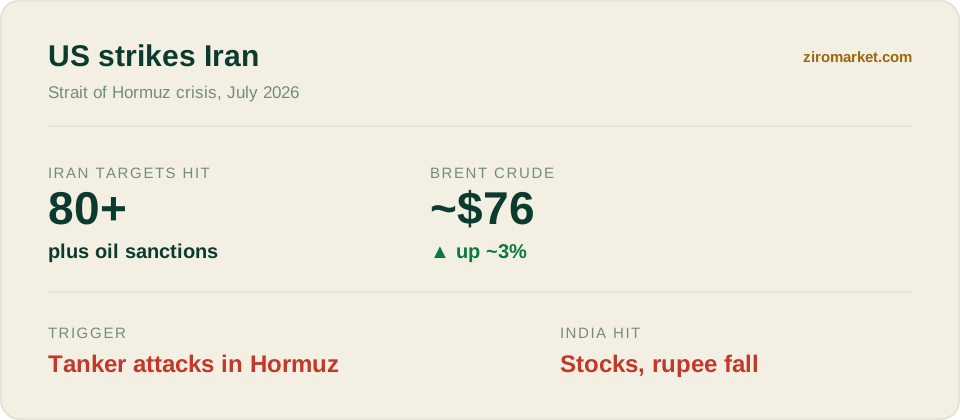
A conflict thousands of miles away just landed on India's economy. The US launched strikes on more than 80 Iranian targets and reimposed sanctions on Iranian oil after Iran attacked ships near the Strait of Hormuz, sending crude up about 3% to near $76 a barrel and knocking Indian stocks lower. For a country that imports most of its oil, the return of the war premium is a direct threat to inflation, the rupee, and growth.
The escalation revived the very fear an earlier ceasefire had calmed: that the world's most important oil chokepoint could be disrupted again.
What Happened
The sequence unfolded fast. Over July 7, Iran's Revolutionary Guards struck commercial vessels near the Strait of Hormuz, including a Qatari-owned LNG tanker and a Saudi-flagged supertanker, damaging ships and setting one ablaze. The US responded with a wave of strikes on more than 80 Iranian targets, hitting air defences, command centres, coastal radar, and dozens of IRGC boats.
Alongside the military action, Washington reimposed the oil sanctions it had eased under the ceasefire, revoking the waiver that allowed Iranian exports and giving buyers until July 17 to wind down transactions. Iran then retaliated, launching attacks on US military sites in Kuwait and Bahrain, widening the confrontation beyond Iranian soil and deepening fears of a broader regional war.
The Strait of Hormuz sits at the centre of it all. The narrow waterway between Iran and Oman carries roughly a fifth of the world's oil and a large share of its LNG, so any threat to shipping there ripples instantly through global energy markets. Vice President JD Vance had been in Switzerland for talks aimed at clarifying terms to end the war, which now look far more fragile.
Why This Matters for India
Few economies are as exposed to an oil shock as India. India imports more than 85% of its crude, so every dollar on the oil price widens the import bill, pressures the trade deficit, and weighs on the rupee, which slipped toward 95.2 against the dollar as crude jumped. The mechanics are unforgiving for a large net importer.
The inflation channel is the deeper worry. Fuel and transport costs feed into the price of almost everything, so a sustained rise in crude lifts inflation over time and can limit the Reserve Bank of India's room to support growth. After months in which cheap oil had been a quiet tailwind, its reversal removes one of the props under the economy, as tracked on our crude oil price today page.
Markets felt it immediately. The Nifty and Sensex fell, with oil and gas and FMCG stocks leading the decline, detailed in our Indian stock market today wrap, and the rupee came under fresh pressure, covered on our rupee vs dollar today page. The move undid part of a four-day rally that had briefly lifted the mood.
Market Reaction
The reaction was textbook risk-off. Oil-sensitive and consumption stocks led the fall as investors priced the crude spike straight into earnings expectations, while safe havens like gold firmed. It was a swift rotation from the optimism that had defined the start of July.
Crude itself did the talking. WTI rose about 3.1% to $72.61 and Brent about 3.1% to $76.49, reversing part of a slide that had taken prices near a four-month low on glut worries. The speed of the move showed how much of a risk premium the market had shed during the ceasefire, and how quickly it can return.
What Investors Should Watch
The first thing to watch is the Strait of Hormuz itself. Because the whole reaction hinges on the threat to shipping, any actual blockage or further tanker attacks could push oil sharply higher, while credible de-escalation could pull it back just as fast.
The second is the oil sanctions timeline. With buyers of Iranian oil given until July 17 to wind down, the market will watch how much supply actually leaves and whether other producers, including OPEC+, step in to fill the gap.
The third is the inflation and policy read-through in India. A sustained oil rise would feed into the inflation outlook and the rupee, shaping the Reserve Bank of India's next moves, so the domestic data becomes more sensitive to every oil headline.
Risks to Monitor
The clearest risk is a genuine disruption to Hormuz. A prolonged closure would be a supply shock of a different magnitude, capable of sending oil far higher and hitting import-dependent economies like India hard.
A second risk is a wider war. Iran's strikes on Kuwait and Bahrain raise the danger of the conflict spreading across the Gulf, which would keep a large risk premium in oil and sentiment fragile.
The third, for India specifically, is the double blow of costlier oil and a weaker rupee, which together inflate the landed cost of fuel and feed straight into inflation. This is general information, not investment advice.
The 2026 Strait of Hormuz crisis has proven, again, how fast a distant conflict can reach an Indian household's budget. A week ago the oil market feared a glut; today it fears a shortage. For India, the difference shows up in the price of petrol, the value of the rupee, and the direction of the Nifty, all now hostage to a narrow stretch of water in the Gulf.