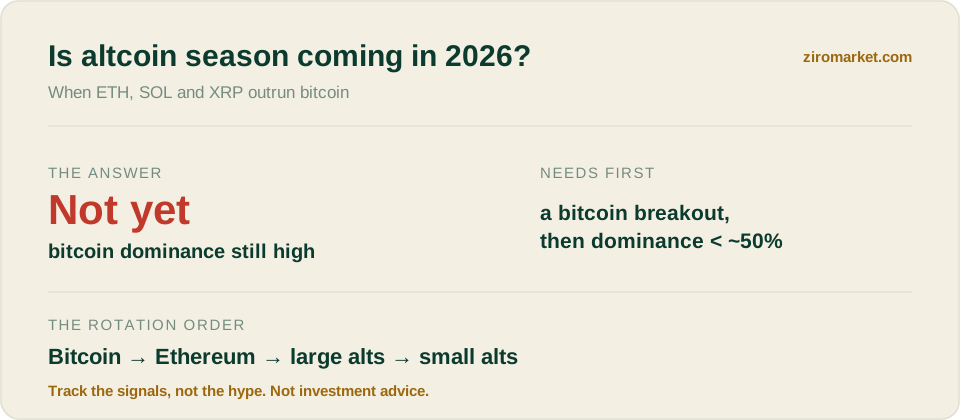
Every crypto cycle has a moment when the small coins steal the show from bitcoin, and traders spend the quiet months asking when it will come. The honest answer for 2026 is: not yet. Bitcoin dominance is high, altcoins like Ethereum, Solana and XRP are lagging, and an altcoin season, when alts broadly outperform bitcoin, has not begun and typically will not until bitcoin rallies and then stabilises. So the setup is possible but not present.
Understanding the sequence is what separates waiting patiently from chasing a season that has not started. It is educational, not investment advice.
What is altcoin season?
An altcoin season is when the rest of crypto beats bitcoin. It is a stretch of weeks when most altcoins, meaning every cryptocurrency other than bitcoin, rise faster than bitcoin, and it is often measured by an altcoin season index that signals a season when about 75% of the top 50 altcoins outperform bitcoin over 90 days. It usually arrives late in a bull cycle, after bitcoin has already had its run.
The idea rests on how money moves through crypto. Capital tends to enter through bitcoin first, the safest and largest coin, and only later spreads into riskier altcoins, which is why an altcoin season follows a bitcoin rally rather than leading it.
Is altcoin season here in 2026?
No, and the signals show why. Here is the checklist against 2026.
The single biggest reason there is no altcoin season is that bitcoin dominance is high, partly because spot bitcoin ETFs channel institutional money specifically into bitcoin, as our bitcoin dominance and altcoin season index piece explains. With money concentrated in bitcoin rather than spreading out, altcoins like Ethereum have lagged badly.
What would trigger it?
The trigger is a specific sequence, not a date. First bitcoin needs to rally and then steady, which pushes its dominance down as holders take profits and rotate into altcoins; then risk appetite, ideally helped by rate cuts and easy liquidity, does the rest. Until bitcoin breaks out of its range, that chain cannot start, which is why the range-break question matters so much, as our bitcoin H2 2026 outlook lays out.
The order of events is the tell. When bitcoin dominance clearly turns down while bitcoin itself holds firm, that combination has historically been the earliest sign that capital is rotating into altcoins.
There is a liquidity dimension too. Altcoin seasons have historically coincided with easy money, when low interest rates and strong risk appetite push investors toward the riskiest corners of the market. With the US Fed leaning dovish and possibly cutting later in 2026, that backdrop is turning more favourable, which is one reason some analysts pencil in a possible season later in the cycle. But liquidity alone is not enough: without bitcoin leading first and its dominance falling, cheap money tends to flow back into bitcoin, not out of it.
Which altcoins tend to lead?
The rotation usually flows from big to small. Ethereum typically moves first as money leaves bitcoin, followed by other large-cap altcoins like Solana and XRP, and only later do smaller, riskier coins run, as our Solana 2026 and XRP 2026 pieces cover. The safest altcoins lead; the most speculative follow.
Every cycle differs, though. There is no rule that guarantees a particular coin leads, or that a season arrives on schedule, which is why treating the sequence as a certainty is a common mistake.
For Indian investors
The tax makes chasing a season expensive here. India taxes all crypto gains at an effective 34%, with a 1% TDS and no loss offset, as our crypto tax India guide explains, so the fast, volatile trading an altcoin season invites is heavily penalised. A season can turn quickly, and the tax code does not forgive the losses.
That reality argues for patience over speculation. With no loss set-off and a flat 30% tax, Indian holders are better served by a clear view on whether the cycle is actually turning than by trying to trade every altcoin swing.
Risks to monitor
The clearest risk is that the season never comes this cycle. Elevated bitcoin dominance, driven by structural ETF demand, could keep money in bitcoin longer than past cycles suggest.
A second risk is a false start. Brief altcoin rallies happen inside bitcoin-led markets and fade fast, trapping those who mistake them for the real thing.
The third is a broad risk-off shock, where altcoins, being higher-risk than bitcoin, fall hardest and fastest, ending any budding season abruptly. This is general information, not investment advice.
So is altcoin season coming in 2026? Possibly, but not yet, and not until bitcoin does its part first. The ingredients, a bitcoin breakout, falling dominance, and returning risk appetite, are known and watchable, which is the useful part: rather than guessing, you can track the signals and let them, not the hype, tell you when the alts are finally ready to run.