Few Indian stocks have swung between hope and doubt like this one. Ola Electric went from India's electric-vehicle darling, and the runaway leader of the e-scooter market, to a cautionary tale that has lost roughly half its market share, and in 2026 the question is whether it is staging a comeback or sliding toward collapse. It is one of the market's most watched, and most emotional, turnaround stories.
The company that made electric scooters mainstream in India now has to prove it can survive the competition it inspired. The answer will decide whether its many retail shareholders are early or wrong.
What Went Wrong
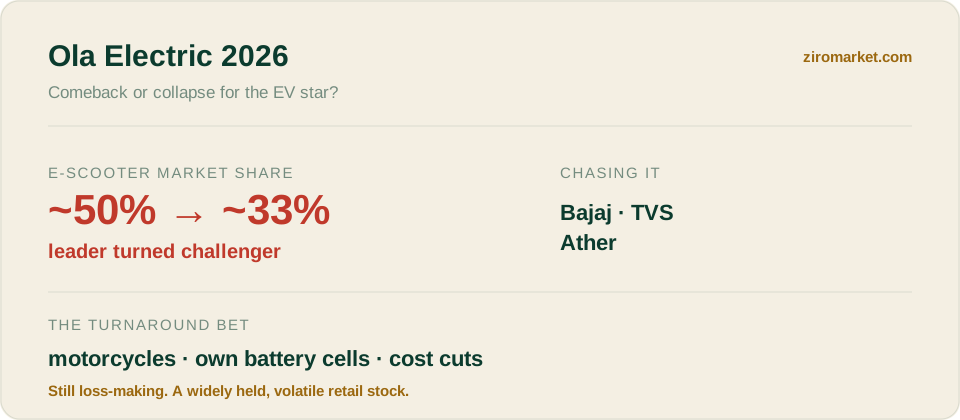
The fall was faster than the rise. After leading India's electric two-wheeler market with around 50% share, Ola Electric saw that slip to roughly a third as customer complaints about service and quality piled up and rivals moved in. A brand built on being first struggled when buyers started judging it on reliability.
Scrutiny made it worse. Questions over sales and registration data, and the gap between reported and registered vehicles, drew regulatory attention and dented trust, at exactly the moment the company needed to reassure customers and investors. For a young listed company, credibility is capital, and some of it was spent.
The financials stayed under strain. Ola Electric has continued to post losses as it spends to grow, and with market share falling, the path to profit looked harder, which is why the stock re-rated sharply from its post-IPO highs.
The Comeback Plan
Ola is not standing still. Its recovery rests on widening beyond scooters into motorcycles, making its own battery cells to cut costs and lift margins, and tightening spending to move toward profitability. Each of these is a real lever, and each depends on execution.
Own-cell manufacturing is the boldest bet. If Ola can produce its own battery cells at scale and quality, it would control its biggest cost and differentiate its products, but battery manufacturing is capital-heavy and hard, and the payoff is years away. It is the highest-risk, highest-reward part of the plan.
Service and product breadth are the nearer-term fixes. Improving after-sales service to win back trust, and launching motorcycles to expand the addressable market, are the moves that could stabilise share, if buyers give Ola a second look.
The Competition
Ola no longer has the market to itself.
Why This Matters for Investors
Ola Electric is a test case for Indian new-age stocks. It shows how quickly a first-mover advantage can erode when execution slips and deep-pocketed incumbents respond, a lesson that echoes across the new-age space, from quick commerce to fintech. The market is watching whether a disruptor can mature into a durable business.
It is also a widely held retail stock, which makes it emotionally charged. Many small investors bought into the EV story at listing, so the turnaround is personal for them, and the stock tends to move sharply on every product launch, sales number and regulatory headline. That volatility cuts both ways.
The prize is still large. India's shift to electric two-wheelers is early, with EVs a small but fast-growing share of total scooter sales, supported by government incentives and high fuel costs, so the market Ola helped create will keep expanding for years. That means even a smaller share of a much bigger pie could be worth a lot. The danger for Ola is the classic first-mover trap: inventing a category only to watch better-resourced rivals harvest most of the growth, a pattern that has humbled pioneers in many industries before it.
For the EV theme broadly, Ola's fate matters. It is the most visible pure-play EV bet on the market, so its struggle raises the bar for how investors price EV promises against EV delivery, a caution that also colours how they view Tata Motors' EV business and the wider auto sector.
Risks to Monitor
The clearest risk is continued share loss. If Bajaj, TVS and Ather keep gaining, Ola's volumes and pricing power could erode further.
A second risk is execution on cells and motorcycles. Both are hard and capital-heavy, and delays or quality issues would hurt an already stretched balance sheet.
The third is sentiment. As a volatile, retail-heavy stock, Ola can swing hard on any negative headline, and profitability remains unproven. This is not a recommendation to buy or sell. This is general information, not investment advice.
Ola Electric in 2026 is a company fighting to turn a head start into a lasting lead before its rivals close the gap for good. The market it created is now crowded, and its comeback depends on doing the unglamorous things, service, costs and quality, better than the giants chasing it. Whether that is a comeback in the making or a leader in slow decline is the question its shareholders are living with every quarter.